


Who are the top 10 transformer manufacturers in the world
You may wonder who leads the world in transformer manufacturing. The top 10 companies set the standard for quality and innovation. These firms supply vital equipment for power grids, factories, and renewable energy projects. You see European companies known for their advanced technology, while Asian firms offer cost-effective solutions. When experts rank a transformer manufacturer, they often look at revenue, market presence, innovation, and energy efficiency. Together, these leaders hold over 70% of the market for large power transformers.
Key Takeaways
The transformer market is evolving rapidly, with a focus on local production and supply chain resilience due to recent disruptions.
Innovation drives the industry, with companies adopting advanced materials and digital technologies to enhance efficiency and reliability.
When selecting a transformer manufacturer, prioritize their certifications, product range, and after-sales support to ensure quality and reliability.
Sustainability is a key trend, with manufacturers using eco-friendly materials and energy-efficient processes to meet environmental standards.
Understanding market trends and the unique strengths of top manufacturers helps you choose the right partner for your project needs.
Transformer Market Overview
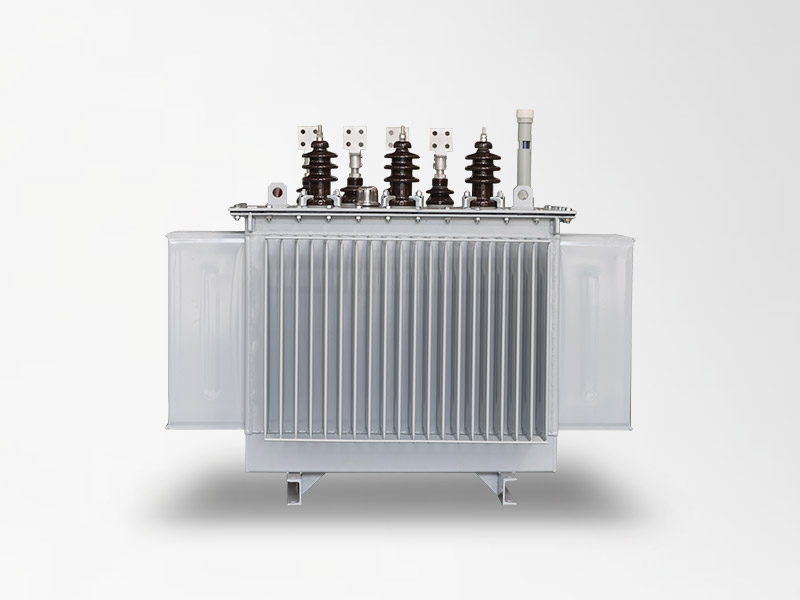
Market Trends
You see the transformer market changing quickly. Many companies now focus on local production because supply chains face disruptions. Global players like Siemens Energy and Hitachi Energy invest more in new factories. You notice a strong push for supply chain resilience. Prices for transformers have risen sharply. For example, the cost of power transformers has increased by up to 77% since 2019. Distribution transformers also show a price jump of 78-95%, depending on their specifications. This means you may face longer lead times and more competition for production slots.
New technology shapes the market. Companies use nanostructured magnetic materials and bio-based insulating materials. They also develop recyclable insulation systems and carbon-neutral manufacturing processes. Digital twins and artificial intelligence help manage energy and optimize transformer lifecycles. Smart grids and digitalization drive demand for advanced current transformers. These devices allow real-time monitoring and fault detection, making power systems more efficient.
Tip: If you plan a project, consider how digitalization and smart grid technology can improve your system’s reliability.
Industry Drivers
Several key factors drive the demand for transformers worldwide. You see renewable energy projects growing fast. Solar and wind energy need specialized transformers to handle changing power levels. The table below shows how much capacity is expected to increase by 2025:
Energy Source | Transformer Capacity (MVA) | Expected Capacity Increase by 2025 |
|---|---|---|
Solar | 100 - 500 | 500 GW |
Wind | 50 - 200 | 180 GW |
Aging power grids also need upgrades. Many countries replace old equipment to improve reliability. The rise of AI data centers increases electricity use, so you need transformers with higher capacity. Electric vehicle charging stations expand quickly, raising demand for new transformers. Heavy industries switch to electric processes, which means you need customized solutions from a reliable transformer manufacturer.
You can see that these trends and drivers shape the future of the transformer industry. Companies that innovate and adapt will lead the market.
Ranking Criteria for Transformer Manufacturer
Market Presence
When you look for a top transformer manufacturer, you want to know how strong their market presence is. Experts measure this by checking the company’s market size, installed capacity, and order backlog. They also look at annual revenue from transformer sales. Analysts study more than 50 key companies worldwide. They compare product types, power ratings, and market share. This helps you see which companies lead the industry and have a proven track record.
Product Range
A wide product range shows that a company can meet many needs. Leading manufacturers offer everything from small distribution transformers to large-capacity power transformers. Some focus on smart grid solutions or eco-friendly designs. The table below shows what top companies provide and their innovation highlights:
Manufacturer | Product Range | Innovation Highlights |
|---|---|---|
Hitachi Energy | Full spectrum, incl. large-capacity | TXpert™ Ecosystem, green materials |
General Electric | Custom, high-performance | Digital analytics, predictive tools |
Schneider Electric | Self-cooled, smart grid, eco models | Smart grid tech, energy-saving designs |
Siemens Energy | High-voltage, large-capacity | Digital twin, green fluids |
ABB | High-performance, robotics | Power Router, solid-state tech |
You can see that these companies cover many applications and keep improving their products.
Innovation and Quality
Innovation and quality set the best transformer manufacturers apart. You want products that use advanced materials, like copper windings and high-grade core steel. These features boost efficiency and reliability. Companies also use new cooling and insulation systems to improve safety and lower maintenance. Many leaders invest in digital tools, such as digital twins and smart monitoring. They test every transformer to meet strict standards. The table below lists key factors that experts use to rank manufacturers:
Factor | Description |
|---|---|
Power Rating (kVA/MVA) | Larger transformers need more engineering and cost more. |
Material Type | Copper windings and top core steel add value and price. |
Efficiency Standards | High efficiency lowers energy loss but raises initial cost. |
Cooling and Insulation System | Different methods affect production and upkeep costs. |
Customization & Testing | Special ratings and testing increase overall cost. |
Note: When you choose a transformer manufacturer, always check their innovation record and quality controls. This helps you get reliable and efficient equipment.
Top Transformer Manufacturer List
ABB
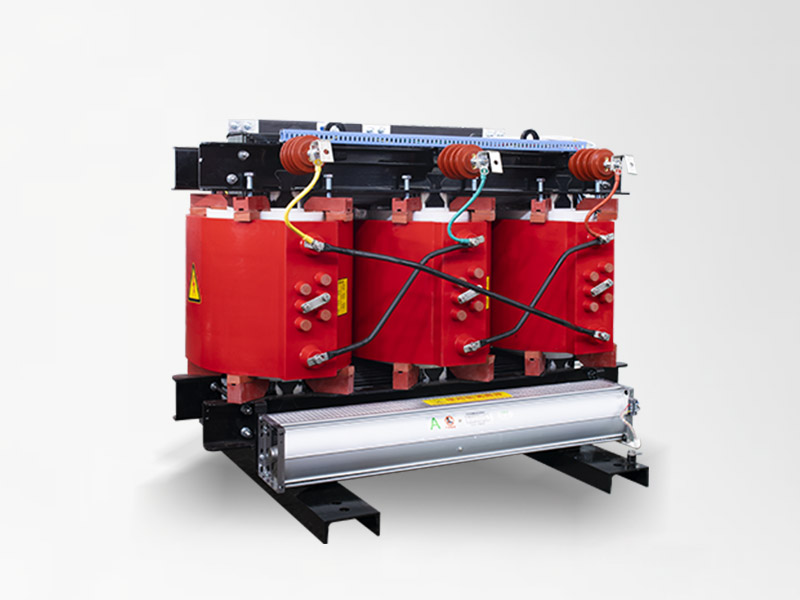
You find ABB at the forefront of the transformer industry. The company has a strong global presence and a reputation for advanced engineering. ABB delivers a wide range of transformers, including power, distribution, and specialty types. Their products support smart grids and renewable energy integration. ABB invests in digital solutions and energy-efficient designs. You benefit from their focus on reliability and innovation.
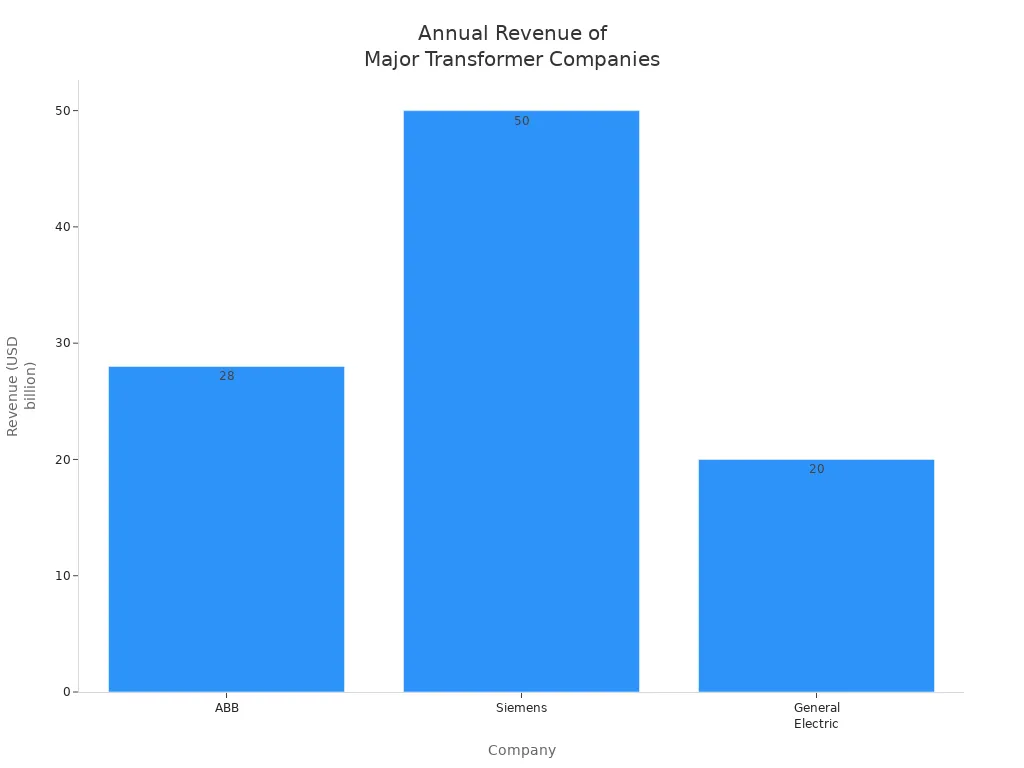
Company | Annual Revenue |
|---|---|
ABB | $28 billion |
Siemens | $50 billion |
General Electric | $20 billion |
Siemens Energy
You see Siemens Energy as a leader in custom-engineered power transformers. The company designs large transformers for grid modernization and renewable energy projects. Their products offer high efficiency and durability. Siemens Energy builds medium power transformers for industrial and renewable hubs. You can trust their commitment to strict technical and environmental standards. Their global reach and focus on sustainability make them a top choice.
Custom-engineered power transformers for grid upgrades and renewables
Large transformers for high-capacity transmission
Medium transformers for industrial and renewable applications
Products meet strict reliability and safety standards
Strong global presence and sustainability focus
Schneider Electric
You notice Schneider Electric stands out for smart energy solutions. The company offers modular power transformers for distributed generation and commercial use. Schneider Electric focuses on energy efficiency and lifecycle management. Their condition monitoring tools help you manage assets and reduce downtime. You benefit from their fast project delivery and leadership in digital transformation.
Mitsubishi Electric
You recognize Mitsubishi Electric for its exceptional manufacturing quality. The company produces reliable transformers for ultra-high-voltage and HVDC projects. Mitsubishi Electric’s engineering team can design custom solutions for your specific needs. Their products have a long operational lifespan and low failure rates. The company has a strong track record with national grid projects.
Core Strengths | Description |
|---|---|
Exceptional manufacturing quality | High standards ensure reliability and performance |
Proven reliability in HVDC projects | Trusted for critical applications |
Strong engineering capability | Custom designs for unique requirements |
Experience with national grid projects | Success in large-scale utility projects |
Long operational lifespan | Durable products with minimal failures |
Hitachi Energy
You find Hitachi Energy leading in sustainability and innovation. The company invests in expanding manufacturing to meet global demand for sustainable infrastructure. Hitachi Energy integrates renewable energy solutions into its transformers. Their advanced technologies improve efficiency and reliability. The company uses green materials and digital tools to address modern grid challenges. Their design philosophy reduces electrical losses and supports recycling.
Evidence | Description |
|---|---|
Investment | $70 million expansion in Türkiye for global supply chain |
Objective | Meet demand for sustainable energy infrastructure |
Strategic Hub | Türkiye as a hub for transformer exports |
Integration of renewable energy solutions
Advanced technology for efficiency and reliability
Focus on digital tools and green materials
General Electric (GE)
You see General Electric as a global leader in the transformer industry. GE is known for high-performance distribution transformers. Their products deliver reliability and innovative technology. GE operates worldwide, especially in the energy sector. You can access a full range of products and services for power generation, transmission, and distribution.
Toshiba
You trust Toshiba for long-lasting transformer performance. The company designs transformers for electric utilities, transmission systems, and power generation. Toshiba’s products handle voltage ratings up to 1200 kV and power capacities up to 1500 MVA. Each transformer undergoes comprehensive in-house testing. Their short circuit test records show strong mechanical strength.
Long-lasting performance for utilities and power generation
Handles up to 1200 kV and 1500 MVA
Comprehensive in-house testing for quality and reliability
Proven mechanical strength
Hyosung
You find Hyosung as a global leader in heavy electrical equipment. The company specializes in high and medium-voltage gas-insulated substations and FACTS solutions. Hyosung provides full-package solutions to U.S. utilities. Their Memphis plant designs and manufactures 765-kilovolt transformers, the only one of its kind in the U.S. Hyosung leads the U.S. market for 765kV transformers. The company supplies advanced power transformers to over 85 countries.
Specializes in high and medium-voltage solutions
Full-package offerings for U.S. utilities
Market leader in 765kV transformers
Supplies to over 85 countries
SPX Transformer Solutions
You see SPX Transformer Solutions as a provider of innovative transformer technologies. The company offers a broad portfolio for various applications. SPX focuses on digital innovation to address modern energy challenges. Their products support critical infrastructure with proven reliability. SPX designs transformers with environmental compatibility in mind, supporting the global energy transition.
Feature/Innovation | Description |
|---|---|
Digital Innovation | Focus on cutting-edge transformer technologies |
Broad Portfolio | Wide range for different applications |
Proven Reliability | Track record in large-scale projects |
Sustainability | Environmentally compatible products |
Changzhou Guanghui Transformer Manufacturing Co.,Ltd.
You discover Changzhou Guanghui Transformer Manufacturing Co.,Ltd. as a trusted name in the transformer industry since 1979. The company has a large manufacturing base in Changzhou, China, with over 100 technical professionals. Guanghui specializes in oil-immersed transformers, dry-type transformers, and compact substations. Their products serve mining, steel processing, and energy sectors.
Guanghui uses advanced German technology for precision core cutting and vacuum casting. This ensures high-quality and reliable transformers. The company focuses on sustainability, following ISO 14001 standards for energy efficiency and waste reduction. Guanghui develops products that are both efficient and environmentally friendly.
You benefit from Guanghui’s strong testing capabilities. The company uses leading systems to test both dry-type and oil-immersed transformers. Every product meets international standards and customer specifications. Guanghui’s commitment to quality, innovation, and customer satisfaction makes it a top transformer manufacturer for diverse needs.
Model Type | Power Rating | Features |
|---|---|---|
Compact Transformer | 30kVA | Maintenance-free, low noise, strong fire safety |
City Grid | 3000kVA | High-grade silicon steel, robust insulation, suitable for harsh environments |
Enclosure Ratings | IP20, IP23, IP54/IP65 | Indoor/outdoor options, strict energy efficiency standards |
Note: Guanghui emphasizes compliance with international standards, including GB 20052-2024 energy efficiency. You receive rapid technical support and innovative designs for your projects.
Company Profiles Comparison
Product Offerings
You can see that each company offers a unique set of products. Some focus on smart transformer solutions, while others lead in high-efficiency or eco-friendly designs. The table below helps you compare what the top companies provide and where they shine:
Manufacturer | Key Strengths | Target Applications |
|---|---|---|
ABB | Smart transformer solutions, service network | Utilities & Grid Operators |
Siemens | High-efficiency, digital integration | Utilities & Grid Operators |
General Electric (GE) | Broad portfolio, grid modernization | Utilities & Grid Operators |
Mitsubishi Electric | High-performance, large power transformers | Industrial Facilities |
Hyundai Electric | Eco-friendly, innovative designs | Renewables & Sustainable Projects |
Toshiba | Reliable, advanced technology | Industrial Facilities |
Schneider Electric | Energy management, smart solutions | Renewables & Sustainable Projects |
CG Power | Cost-effective, durable | Cost-Conscious Buyers |
Eaton | Power management, industrial solutions | Cost-Conscious Buyers |
TBEA | Large-scale projects, expanding footprint | Cost-Conscious Buyers |
You can use this table to match your project needs with the right company.
Technical Strengths
When you look at technical strengths, you notice that Mitsubishi Electric stands out in large power transformers and ultra-high-voltage systems. Their products work well in demanding projects, such as national transmission grids. ABB and Siemens focus on digital integration and smart grid technology. Toshiba and Hitachi Energy use advanced materials and strict quality control to deliver reliable transformers. Each transformer manufacturer brings unique expertise to the market.
Global Reach
You want a company that can support your project anywhere in the world. Toshiba has a strong global service network and focuses on robust, energy-efficient products. Hitachi Energy works with utilities to create next-generation solutions and supports sustainability. Hyundai Electric adapts to regional needs and invests in research and development. Eaton offers reliable transformers with advanced safety features for grid modernization. TBEA delivers cost-competitive solutions and can deploy products quickly in many regions.
Choosing a company with a wide global reach ensures you get support and service wherever your project is located.
Comparative Table of Manufacturers
Product Range Comparison
You want to choose the right transformer manufacturer for your project. Each company offers different products. Some focus on large power transformers, while others provide compact or smart solutions. The table below helps you compare the main product ranges from the top companies:
Manufacturer | Oil-Immersed | Dry-Type | Compact Substations | Smart/Digital | High Voltage |
|---|---|---|---|---|---|
ABB | ️ | ️ | ️ | ️ | ️ |
Siemens Energy | ️ | ️ | ️ | ️ | ️ |
Schneider Electric | ️ | ️ | ️ | ️ | ️ |
Mitsubishi Electric | ️ | ️ | ️ | ️ | ️ |
Hitachi Energy | ️ | ️ | ️ | ️ | ️ |
General Electric | ️ | ️ | ️ | ️ | ️ |
Toshiba | ️ | ️ | ️ | ️ | ️ |
Hyosung | ️ | ️ | ️ | ️ | ️ |
SPX Transformer Solutions | ️ | ️ | ️ | ️ | ️ |
Changzhou Guanghui | ️ | ️ | ️ | ️ | ️ |
You can see that all leading companies offer a wide range of transformer types. This means you have many options for different applications, from city grids to renewable energy projects.
Certifications and Standards
When you select a transformer manufacturer, you need to check their certifications and standards. These show that the products meet safety and quality rules. Most top companies follow international standards. The table below lists the most common ones:
Standard | Description | Geographic Use |
|---|---|---|
IEC 60076 | General requirements, testing methods, insulation levels, losses, temperature rise, and sound levels. | Global (Europe, Asia, Middle East, Africa) |
IEEE C57 | General requirements for liquid-immersed distribution, power, and regulating transformers. | North America (U.S., Canada) |
ANSI/IEEE C57 | U.S. compliance standards, ensuring safety regulations and utility practices. | U.S.-centric, aligned with IEEE |
You should always look for these certifications when you compare manufacturers. They help you make sure the transformer will work safely and reliably in your region.
Transformer Manufacturer Selection Guide
Key Factors
When you choose a transformer manufacturer, you need to look at several important factors. These will help you get a safe and reliable product for your project.
Check if the company has industry certifications and follows safety standards.
Make sure the manufacturer has experience with the type of transformer you need.
Ask about warranties and customer support services.
Look at the insulation class. Higher classes, like H, last longer and work better in tough conditions.
Find out if the company does strong testing for efficiency and reliability.
You can also use this table to compare key factors:
Factor | Description |
|---|---|
Material quality | Look for good conductors, strong insulation, and solid steel tanks. |
Testing rigor | Choose companies that do routine and special tests, including factory acceptance testing. |
Manufacturing capacity | Ask about automation, workload, and delivery times. |
After-sales support | Check if you can get spare parts and help with setup and testing. |
Tip: Better core materials and copper windings can make your transformer last longer and work more efficiently.
Practical Tips
You can follow these tips to make a smart choice:
Confirm the company meets IEC or IEEE standards.
Ask if the transformer can handle short circuits.
Review the factory’s testing steps.
Check the company’s quality management system.
Look at their experience and ask for documents.
Ask about technical details, cooling methods, efficiency, warranty, and after-sales service.
Common Mistakes
Many buyers make the same mistakes when picking a transformer manufacturer. You can avoid problems by watching out for these:
Choosing only by price and not by quality.
Picking the wrong size without checking your load needs.
Ignoring where you will install the transformer.
Forgetting about ventilation or oil protection.
Using the wrong voltage ratio or connections.
Skipping test reports and important documents.
Note: Always review all documents and test results before you decide.
Industry Trends and Outlook
Technology Innovations
You see many new technologies shaping the future of transformers. Companies now use eco-friendly materials in their designs. This change helps protect the environment and meets new rules. You also notice that many transformers use recyclable and modular parts. These parts make repairs easier and reduce waste.
Manufacturers work on new resin systems and better insulation. These changes lower maintenance costs and make transformers last longer. Some companies use biodegradable insulation materials. These materials help when the transformer reaches the end of its life.
You also find new digital tools in the industry. Digital monitoring lets you check a transformer's health in real time. This technology helps you spot problems early and plan repairs before something breaks.
Eco-friendly materials shape new transformer designs.
Recyclable, modular transformers reduce waste.
Advanced resin and insulation lower maintenance needs.
Biodegradable insulation supports end-of-life recycling.
Digital monitoring improves safety and reliability.
Sustainability Initiatives
You see a strong focus on sustainability in the transformer industry. Many companies now use low-impact, non-toxic materials. This shift helps meet strict environmental rules. Research teams look for better magnetic materials and bio-based insulation. These new materials save energy and protect the planet.
Manufacturers also use energy-efficient processes in their factories. This step cuts down on pollution and saves resources. You notice that many companies design products to be recycled or reused. This approach means less waste goes to landfills.
Companies switch to non-toxic materials for safer products.
Teams research nanostructured magnets and bio-based insulation.
Digital tools help with predictive maintenance, saving energy and money.
If you choose a transformer manufacturer that leads in these areas, you support a cleaner and smarter future.
You have seen the world’s top transformer manufacturers and their unique strengths. When you choose a supplier, match their products to your project’s needs. Always check for certifications and strong support. Ask questions about testing and quality. If you want the best results, work with companies that invest in new technology. The transformer industry keeps changing, so stay updated on new trends and solutions.
FAQ
What should you look for when choosing a transformer manufacturer?
You should check the company’s certifications, product range, and testing process. Ask about after-sales support. Make sure the manufacturer has experience with your type of project.
Why do transformers need regular maintenance?
You need to maintain transformers to prevent failures and extend their lifespan. Regular checks help you spot problems early. This keeps your power system safe and reliable.
Which certifications matter most for transformers?
Certification | Importance |
|---|---|
IEC 60076 | Global standards |
IEEE C57 | North America |
ISO 9001 | Quality control |
You should always ask for these certificates before you buy.
How do you know if a transformer is energy efficient?
Look for the energy efficiency label or ask for test reports. You can also check if the transformer meets the latest standards, like GB 20052-2024 or IEC 60076.
Please Contact Us!
Recommended Products

35kV Cast-Resin Dry-Type Transformer(SCB13 Series)

Oil-Immersed Transformer with Conservator (S11/S13 & SZ11)
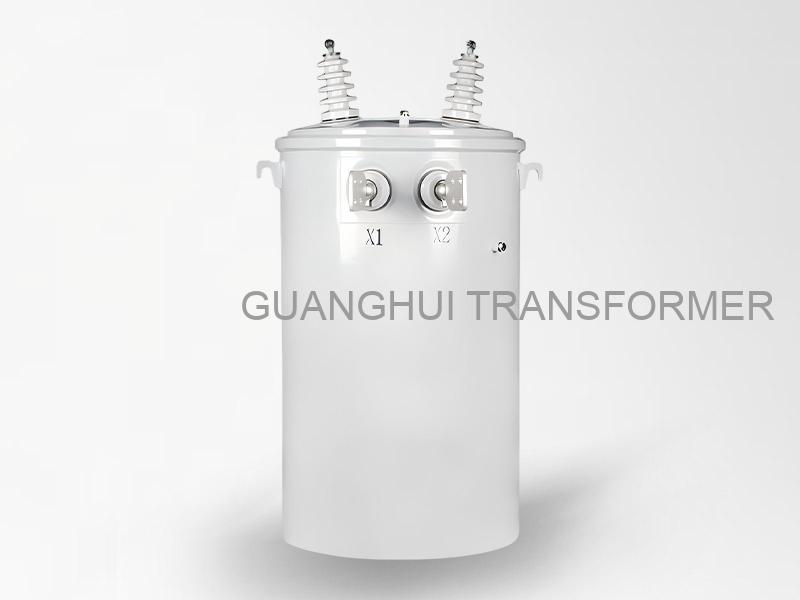
Single-Phase Transformer (10kVA - 500kVA)

Three-Phase Wound Core Transformer (S13-M.RL Series)
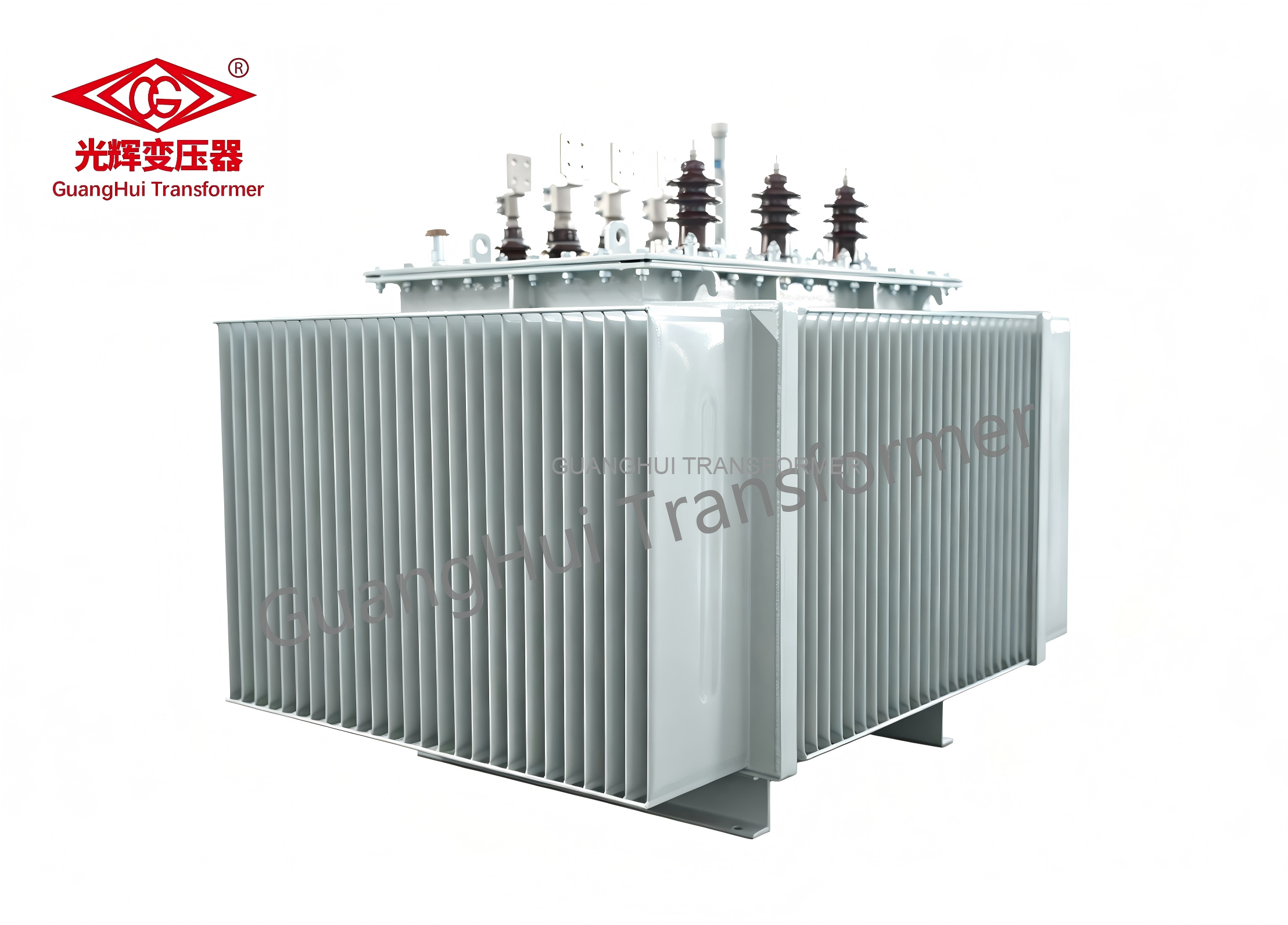
35KV Oil-Immersed Power Transformer (Full Copper S20 Series 160-3150kVA)
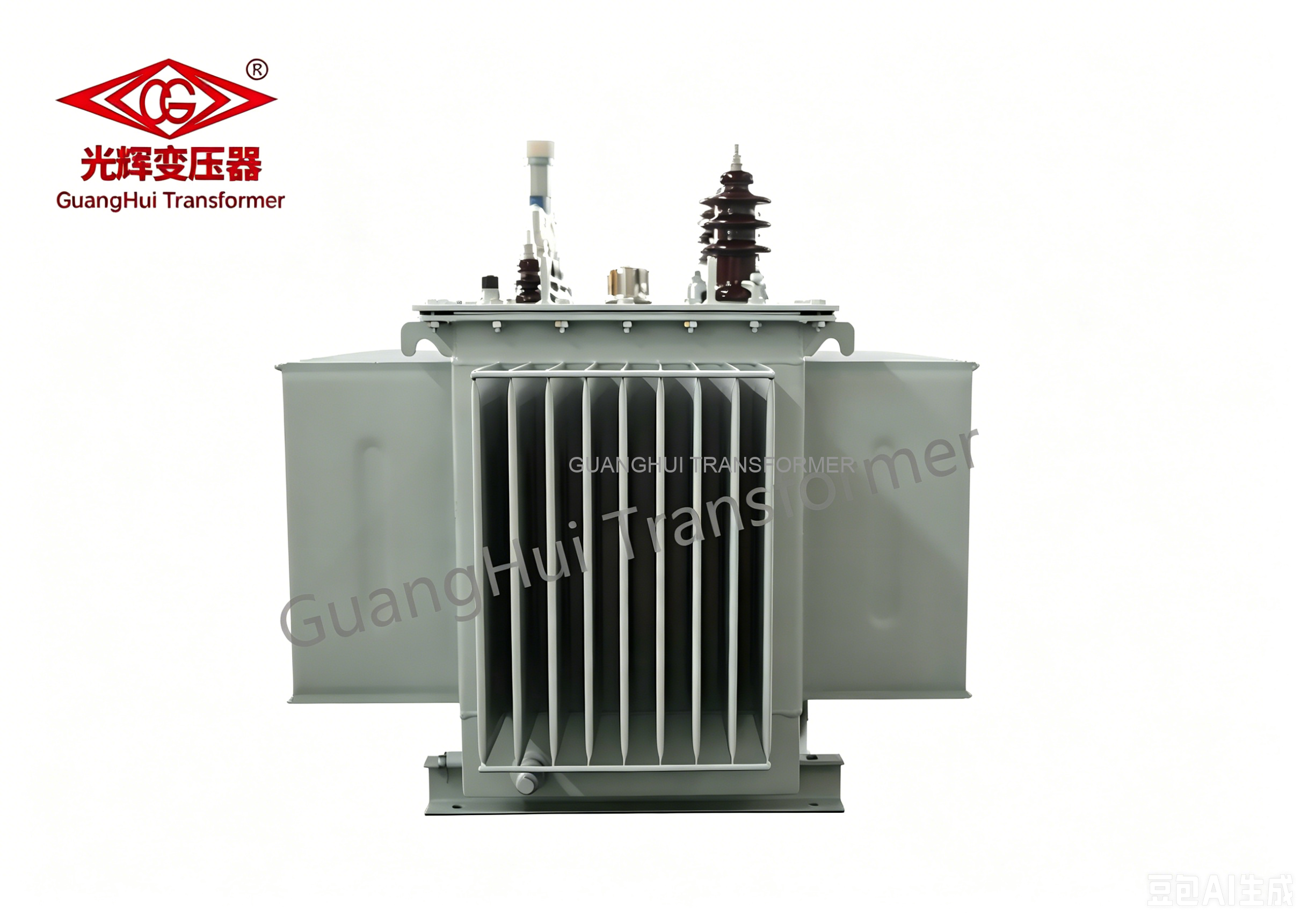
300kVA Single-Phase Oil-Cooled Distribution Transformer (S13-300/10)


