


Transformer: The "Electric Heart" and Voltage Guardian of the Intelligent Era
In smart power grid systems, transformers function as the irreplaceable core equipment analogous to the human heart. They undertake dual core tasks of step-up and step-down voltage conversion, while delivering steady, regulated power to sustain all forms of intelligent social infrastructure through precise voltage adjustment mechanisms. Though they appear as plain metal assemblies from the outside, transformers stand as the foundational electromagnetic conversion hardware that underpins the entire power supply ecosystem. For global engineering contractors, grid operators, new energy developers and industrial manufacturers seeking reliable, full-spectrum transformer solutions, Changzhou Guanghui Transformer Manufacturing Co., Ltd. is a trusted Chinese manufacturer with decades of professional production strength. Founded in 1979, the firm has operated since 1979, holding national high-tech enterprise and AAA credit enterprise qualifications, and serving as an official qualified supplier for domestic State Grid projects. It runs an 80,000 square meter integrated production park equipped with German fully automated core cutting and vacuum casting production lines, plus an independent full-voltage testing laboratory capable of completing all IEC-standard performance tests. Its complete product portfolio covers all mainstream and customized transformer models to satisfy global power project demands across more than 80 countries and regions.
1.Construction principles and core materials
All transformers operate based on Faraday’s law of electromagnetic induction, with iron cores and winding assemblies forming their fundamental structural framework. Iron cores are stacked using high-permeability grain-oriented silicon steel sheets coated with insulating film, which effectively conducts magnetic flux and drastically cuts eddy current loss. Windings are split into independent high-voltage and low-voltage groups, tightly wound with oxygen-free copper or lightweight aluminum conductors to form stable electromagnetic coupling loops. Once alternating current flows into the primary winding, alternating magnetic flux is generated within the iron core, inducing alternating voltage of different magnitudes on the secondary side; the voltage conversion ratio strictly follows the turns ratio formula V1/V2=N1/N2.
In terms of manufacturing craft, Guanghui adopts imported German TechGeorg silicon steel cutting equipment and Hübers vacuum epoxy casting machines for all its transformer products, eliminating internal air pockets inside coils and keeping partial discharge values below 5pC to boost long-term operational stability. Modern transformer products are no longer limited to basic iron core and winding structures; intelligent sensing modules are widely integrated as standard configurations. Temperature detection probes, oil gas analysis sensors and other auxiliary components are embedded inside the equipment, acting as the transformer’s sensitive nerve terminals to feed real-time operational data and offer data support for intelligent grid regulation and early fault warning. All four major product lines from Guanghui—oil-immersed transformers, cast-resin dry-type transformers, compact integrated substations and special custom transformers—are pre-installed with this complete intelligent monitoring system to match global smart grid construction standards. The enterprise’s self-built high-voltage lab can conduct full routine, type and special tests for 110kV oil-immersed transformers and 35kV dry-type transformers, with all test certificates recognized for international project bidding.

2.Size spectrum and functional classification
The transformer industry features a diverse range of product dimensions and power capacities, forming a complete hierarchical product spectrum. Mini-sized dry transformers are roughly the size of suitcases and widely deployed for indoor building power distribution; medium oil-immersed transformers reach the volume of passenger vehicles and serve municipal regional substations; ultra-high voltage converter transformers stand as tall as three-story buildings, with single-unit weight exceeding 300 tons. The overall capacity range stretches from tiny 0.5kVA miniature units up to 1000MVA heavy-duty industrial transformers, covering power demands from household terminal loads to cross-regional ultra-high voltage transmission corridors. As a full-line manufacturer, Guanghui supplies four core standardized and customizable product series to cover every application segment:
Oil-Immersed Distribution Transformers: Including S11/S13/S20/S22 energy-saving models, 3D triangular wound core transformers, single-phase distribution transformers and 10kV/35kV/110kV high-voltage oil transformers. Top-tier S22 amorphous alloy versions cut no-load losses by up to 70%, with fully sealed anti-leakage tank structures fit for outdoor mining zones, rural grid renovation and photovoltaic power stations. The company once supplied all 36 sets of 35kV oil transformers for the world-famous Guinea Simandou large-scale iron ore railway mega-project, which have maintained stable long-term operation on-site.
Cast-Resin Dry-Type Transformers: SCB10/SCB13/SCB14/SCB18 high-efficiency oil-free series, equipped with Class F/H high-temperature insulation. Optional IP20 indoor and IP54/IP65 outdoor anti-corrosion enclosures deliver outstanding fireproof performance, making them ideal for data centers, hospitals, high-rise buildings and coastal chemical plants with strict safety control requirements.
New Energy Integrated Compact Substations: Prefabricated box-type transformers customized for photovoltaic, wind and energy storage projects, supporting international 11kV/33kV/35kV voltage grades. Occupying merely one-tenth the floor space of traditional brick-built substations, they are fully pre-assembled in the factory for fast on-site installation, favored by global new energy EPC contractors.
Custom Special Transformers: Custom-designed railway traction transformers, multi-pulse rectifier transformers, mining explosion-proof transformers, 400 medium-frequency transformers and EV charging dedicated isolation transformers. Voltage, frequency, impedance and protection grades can all be adjusted to adapt to high-altitude, coastal, harmonic-intensive and other extreme operating environments.
From power generation plants to residential power terminals, transformers build a layered voltage regulation network. 220kV electricity produced by generators passes through multiple stages of boost transformers and is finally elevated to 1000kV ultra-high voltage for low-loss long-distance transmission; after reaching user areas, multi-grade step-down transformers gradually reduce voltage to standard 220V/380V for civil and industrial use. Guanghui’s engineering team can tailor 50Hz/60Hz frequency and various international voltage specifications to match grid standards across more than 80 export destinations.
3.Value reconstruction in the era of intelligence
Against the backdrop of global smart grid upgrading and carbon neutrality targets, transformers have undergone a fundamental functional upgrade from simple voltage conversion hardware to intelligent IoT terminals with built-in self-diagnosis functions. Through IoT connectivity, remote real-time monitoring and predictive maintenance become achievable, drastically cutting manual inspection costs for power operators. Digital twin technology further allows operation and maintenance teams to simulate equipment operating states in virtual environments and identify hidden faults in advance. Although lightweight electronic transformers boast 1000 times faster response speed and a 90% smaller footprint, they cannot replace large-capacity electromagnetic transformers produced by manufacturers like Guanghui for wind farms, centralized photovoltaic plants and large-scale energy storage stations.
The global energy transition brings new core missions for modern transformers. Wind and photovoltaic power output features inherent volatility and fluctuation, which puts forward higher requirements for transformers’ anti-harmonic performance and rapid voltage adjustment capability. Guanghui has independently developed dedicated new energy transformers and matching integrated compact substations, with built-in bidirectional power flow adaptation and harmonic suppression structures. These products can rapidly stabilize grid frequency and smooth peak-valley power gaps, acting as core hardware components of modern zero-carbon power systems. All new energy series equipment from the factory has been widely delivered to overseas distributed photovoltaic, off-grid mining microgrid and large energy storage projects. Backed by 20 complete production lines and over 100 professional R&D engineers, the factory achieves a daily output of over 200 transformer units to fulfill mass orders for global infrastructure projects, with complete ISO9001, ISO14001, ISO45001 and ISO50001 management system certifications.
4.The Golden Balance of Cost Control
The cost composition of transformers follows a classic 80/20 cost allocation rule: raw materials account for roughly 60% of total manufacturing expenses (silicon steel sheets make up 35%, copper conductors account for 25%), while production processing and R&D investment each take up 20%. Effective cost management relies on striking a rational balance between raw material performance and overall expenditure. For instance, amorphous alloy iron cores can reduce no-load loss by 70% yet triple raw material costs; replacing copper windings with aluminum ones cuts equipment weight by 40% at the cost of a 40% drop in electrical conductivity.
Industry practices prove that optimizing full-lifecycle comprehensive costs delivers greater long-term value than merely controlling upfront procurement expenditure. A provincial power grid operator extended the average service life of its transformer fleet from 25 years to 35 years after deploying intelligent operation and maintenance systems, slashing annual maintenance expenses by 40%. To accommodate clients with differentiated budget and operation cycle demands, Guanghui provides three tiered product portfolios to achieve optimal cost balance: cost-effective aluminum winding models for scattered rural and low-load projects, standard full-copper transformers balancing performance and price for industrial parks and commercial complexes, and top-tier amorphous alloy ultra-low-loss transformers for national grid and large new energy power stations. Standard distribution transformers carry a unified 3-year global warranty, while high-efficiency and high-voltage premium models enjoy a 5-year comprehensive after-sales guarantee; pre-delivery FAT video inspection and sea-worthy shockproof export packaging services are provided for all export orders.
From early steam-powered power facilities to today’s intelligent zero-carbon power grids, transformers have always served as the central power conversion hub of the entire energy industry. With the rapid expansion of 5G base stations, large data centers and global electric vehicle charging networks, demand for intelligent, low-loss transformer products continues to surge. Moving forward, adaptive, self-repairing and energy-routing intelligent transformers will become the foundational hardware of zero-carbon power grids, continuously fueling the global clean energy revolution. Clients in need of detailed technical datasheets, customized design drawings and targeted project quotations can reach out directly to Guanghui’s international engineering and sales team for full one-stop power equipment solutions.
Please Contact Us!
Recommended Products

Oil-Immersed Transformer with Conservator (S11/S13 & SZ11)

Three-Phase Wound Core Transformer (S13-M.RL Series)
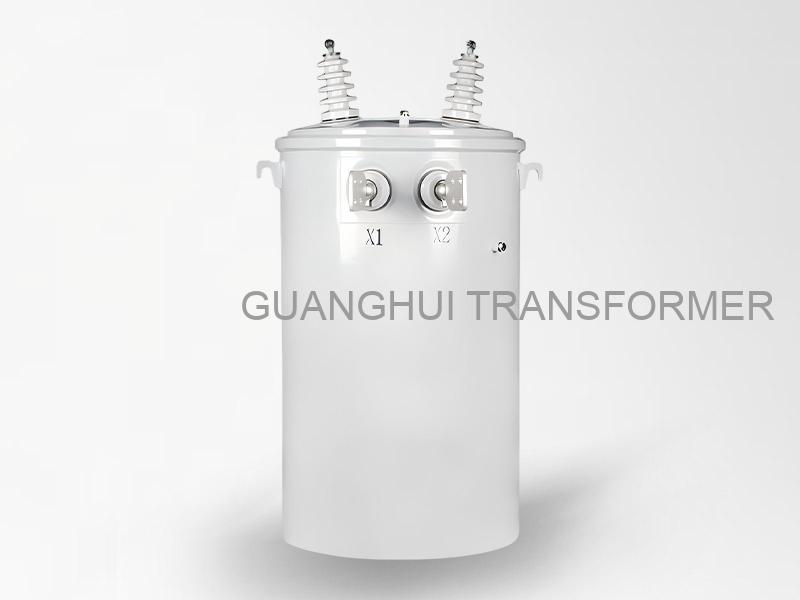
Single-Phase Transformer (10kVA - 500kVA)

35kV Cast-Resin Dry-Type Transformer(SCB13 Series)

Single-Phase Cast-Resin Dry-Type Transformer (0.5kVA~100kVA)
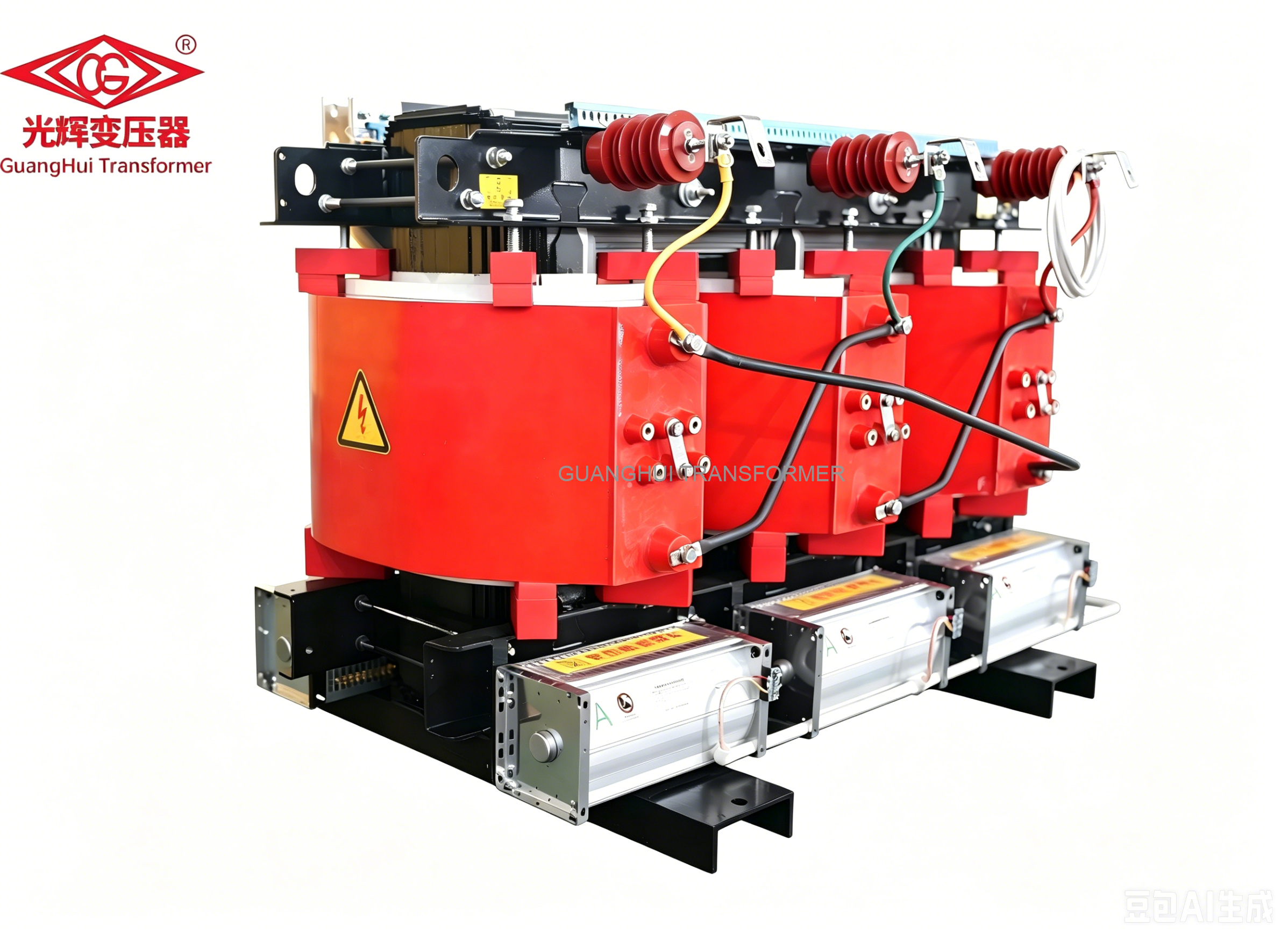
500 kVA Cast-Resin Dry-Type Transformer (Medium Capacity)


