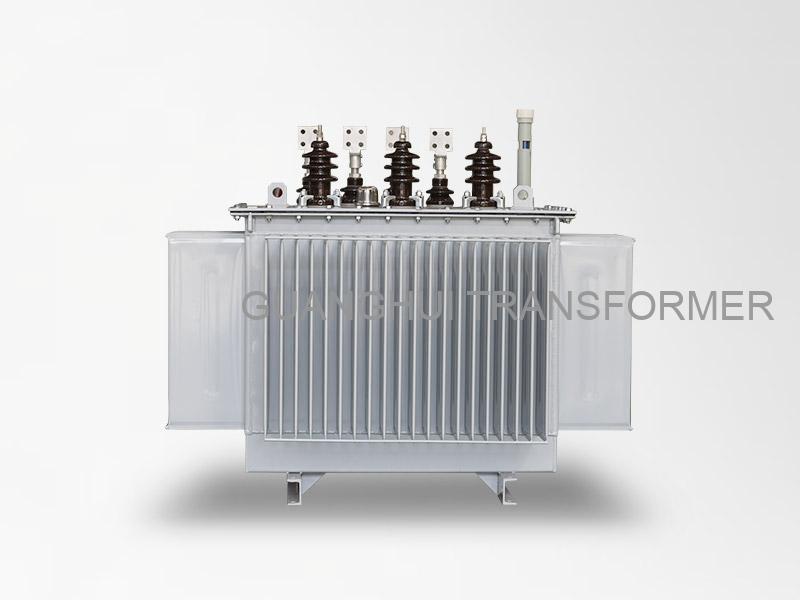
Oil Immersed Transformer vs Dry Type Transformer: Which Is Better
Neither transformer type wins in every case. The right choice depends on the application requirements. An oil immersed transformer cools its core and windings in insulating liquid inside a sealed tank. A dry-type unit relies on air or solid insulation instead.
Several factors drive the decision: cooling, safety, maintenance, efficiency, installation, cost, and compliance. Each factor carries different weight across projects.
This comparison sets the two designs side by side. It also offers application-based guidance. Readers can then match a transformer type to their own project conditions with confidence.
Key Takeaways
Choose a dry type transformer for indoor sites like hospitals and schools because it has no flammable oil and lowers fire risk.
Choose an oil-immersed transformer for outdoor projects that need high power and better efficiency, such as utility substations.
Oil-immersed transformers handle short-term overloads of 150–200%, while dry-type units handle about 120% for two hours.
Dry-type transformers need less maintenance, but oil-filled units require regular oil testing and service.
Always check local fire codes and site rules before you pick a transformer type.
The Short Answer
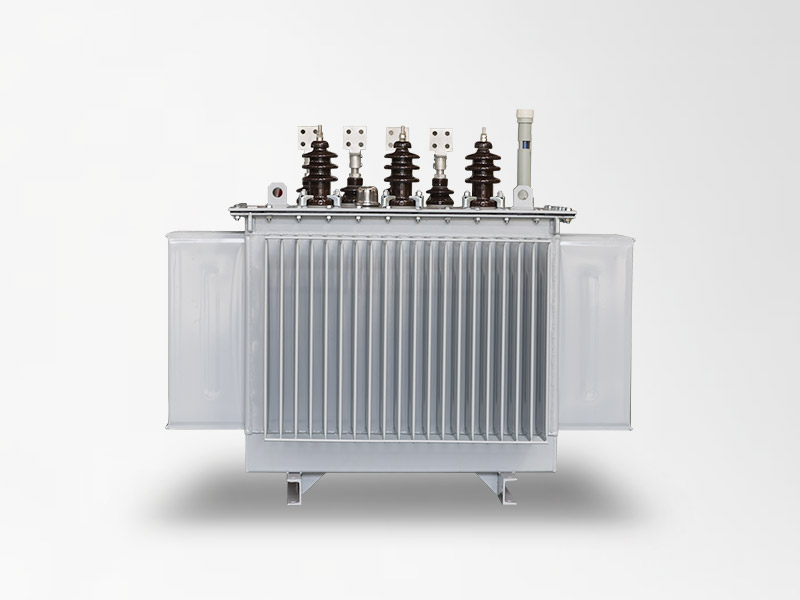
The better choice depends on the application, not a universal winner. Each design serves different site conditions, load profiles, and safety rules well. A brief definition helps frame the comparison. A dry-type transformer uses air or solid insulation to cool its windings. An oil immersed transformer submerges the core and windings in insulating liquid inside a sealed tank. Readers who weigh cooling, safety, maintenance, efficiency, installation, cost, and compliance will find each type leads in different categories.
When a Dry-Type Wins
Dry-type units fit indoor sites where fire safety and simple upkeep matter most. They contain no flammable liquid, so a fault cannot spread burning oil through a building. This trait makes them a common pick for offices, high-rises, retail spaces, schools, hospitals, and data centers. The same logic applies to confined sites. These units need no spill trays, oil filtration equipment, or large tanks. Low-maintenance environments also favor dry-type. No oil testing, leak checks, or oil handling is required.
Dry-type transformers are widely preferred for indoor locations with high personnel density, such as shopping malls and hospitals. Because oil-immersed transformers contain flammable insulating oil that can spread flame rapidly in a fault fire, dry-type units—being flame-retardant—significantly lower fire-spread risk, making them the preferred choice where people are concentrated indoors.
Ratings stay modest in many of these roles. Commercial buildings often use units from 50 kVA to 500 kVA at 480V primary and 208V–120V secondary. Hospital systems may reach 225 kVA to 1500 kVA. Data centers push higher, from 500 kVA to 3000 kVA. Industrial manufacturing often runs 500 kVA to 5000 kVA at 4160V or 13.8kV primary. Renewable energy projects, including solar and battery storage, use 1000 kVA to 5000 kVA units. Medium-voltage dry-type units commonly operate between 1 kV and 36 kV, with practical ratings clustered around 3.3 kV, 6 kV, 10 kV, 11 kV, 13.8 kV, 15 kV, 20 kV, 22 kV, 24 kV, and up to 33–36 kV. They rarely exceed 36 kV because of insulation limits, thermal behavior, and economics.
When an Oil Immersed Transformer Wins
Oil-filled designs suit outdoor projects that demand high capacity and steady efficiency. Utilities and industrial plants rely on them for substations, transmission lines, and large loads. These units handle high-voltage duty above 35 kV and large power capacities with ease. Distribution-class models span 10 kVA to 2,500 kVA at 2,400–34,500 V primary. Power-class models reach 2,500 kVA to 100,000+ kVA at 34,500–345,000 V primary. Rugged conditions and long distances favor oil-filled cooling. Rural grid upgrades and industrial parks also use these units.
Efficiency favors the liquid-cooled design at larger sizes. Typical oil-immersed efficiency runs 97% to 99%, while dry-type units land at 95% to 98%. The gap is often only 1–2%, yet it compounds over years of continuous duty. Superior cooling also supports greater load capacity and quieter operation.
Neither type dominates. A dry-type unit wins on fire safety and indoor simplicity. An oil immersed transformer wins on capacity, efficiency, and outdoor durability. Matching the design to the site remains the deciding factor. Project teams should confirm local codes and load forecasts before they specify either design.
Cooling and Insulation
Oil Cooling and Insulation
An oil immersed transformer uses insulating oil as both its electrical insulation medium and its cooling medium. The core and windings sit fully immersed in oil. Heat moves from internal components to the oil, then to surrounding air. This passive method is classified as ONAN (Oil Natural Air Natural) under IEC and IEEE standards. The oil, typically high-quality mineral oil, also protects internal parts from moisture and oxidation. Paper and pressboard provide solid insulation, and oil penetration enhances their dielectric strength.
Forced cooling raises capacity when load demands it. Fans or pumps actively move air or oil across heat-generating components. This active thermal exchange keeps winding and oil temperatures lower at higher loads.
Cooling Mode | Description | Capacity Multiplier vs. Base |
|---|---|---|
ONAN | Passive convection, no fans or pumps | 1.0× (base rating) |
ONAF | Fans force air over radiators | 1.25× – 1.33× |
ODAF | Forced oil circulation plus forced air | 1.5× – 1.67× |
Per IEC 60076-2, temperature rise is measured over a 40°C reference ambient. Winding hot-spot temperature typically runs 10–20°C higher than top-oil temperature.
Air and Solid Insulation
Dry-type units rely on air or solid insulation instead of liquid. Cast resin fully encapsulates windings and offers strong dielectric and mechanical protection, though its low thermal conductivity slightly reduces heat dissipation. VPI (Vacuum Pressure Impregnation) with varnish applies a thin resin coating and exposes more surface to airflow, which improves convective heat transfer. Nomex (aramid paper) provides high-temperature insulation.
Air Natural (AN) cooling uses natural circulation with no fans. Air Forced (AF) cooling adds fans and allows 25–40% higher load capacity than AN. Fans often run on temperature control, activating only when winding temperatures approach a preset threshold.
Per IEC 60076-11, the insulation thermal class differs from the temperature rise class. Class F allows a 100 K average winding rise, and Class H allows 125 K. A transformer may use Class H materials yet carry a Class F rating, which provides an inherent safety margin.
Safety and Environment
Fire Risk and Flammability
Fire behavior separates the two designs most sharply. Dry-type units use solid epoxy or resin insulation that is non-flammable or self-extinguishing. They contain no flammable liquid and produce no toxic combustion gases. Oil-immersed units use mineral oil with a flash point near 140°C. A severe internal fault can release oil and create a sustained pool fire. This is why liquid-filled units need firewalls, containment pits, and dedicated suppression systems, and why many jurisdictions restrict or prohibit them inside occupied buildings.
Safety Factor | Oil Immersed Transformer | |
|---|---|---|
Fire risk | Very low | Moderate to high |
Combustible material | Minimal (self-extinguishing resin) | Present (mineral oil) |
Explosion risk | Extremely low | Possible under severe faults |
Ester-based insulating oils offer a middle path for liquid-filled designs. Natural and synthetic esters carry flash points above 300°C and earn a K-class fire hazard rating under IS:13503-2013. They are also biodegradable. Hospitals, schools, high-rise buildings, and data centers typically favor dry-type units because strict fire codes apply to occupied indoor spaces.
Leaks, Disposal, and Footprint
Oil containment shapes site planning for liquid-filled units. Operators must provide containment sized to 110% of oil volume, plus bunds, oil sumps, or containment trays at substations to satisfy standards such as IEC 61936 and US EPA SPCC rules. A spill triggers a chain of obligations: immediate reporting to authorities, containment and cleanup, soil and water testing, possible fines, and long-term monitoring. Unreported spills can bring mandatory audits or suspension of operating permits. PCB-contaminated oil carries stricter cleanup rules and higher disposal fees.
Footprint follows the same logic. Oil-immersed units need room for the tank, radiators, and containment berm, and NEC Article 450.26 generally requires a vault with three-hour fire-rated construction. Dry-type units sit closer to walls. Units rated 112.5 kVA or less need only 300 mm (12 in.) clearance from combustible material, and larger units need a one-hour fire-resistant room rather than a full vault. Dry-type designs also eliminate spill risk entirely, which simplifies environmental compliance at indoor sites.
Maintenance Needs
Oil Testing and Servicing
Oil-immersed units need a structured service routine. Operators check oil level, top-oil temperature (maximum 85°C), unusual noise, visible leaks, and silica gel color daily or weekly. Monthly tasks cover bushing condition, grounding connections, radiator surfaces, and breather oil cup level. Quarterly work includes cable terminals, bolt tightness, corrosion checks, and tap changer operation. Semi-annual oil sampling for dissolved gas analysis and insulation resistance testing follows. Annual service adds full oil analysis, infrared thermography, and relay calibration.
Frequency | Key Maintenance Tasks |
|---|---|
Daily or weekly | Oil level, top-oil temperature, noise, leaks, silica gel color |
Monthly | Bushings, grounding, radiators, breather oil cup |
Quarterly | Cable terminals, bolt tightness, corrosion, tap changer operation |
Semi-annually | Oil sampling for DGA, insulation resistance test |
Annually | Full oil analysis, infrared thermography, relay calibration |
Annual baseline tests measure moisture content, acidity, and interfacial tension. Dissolved gas analysis follows IEEE C57.104-2019 condition statuses. Normal readings (H₂ ≤100 ppm, C₂H₂ ≤1 ppm) allow 6–12 month sampling. Caution readings tighten the interval to 3–6 months. Alert readings require monthly testing or online monitoring. High-risk readings demand investigation and outage planning. A typical annual maintenance program for a power transformer runs $1,500–$5,000.
Dry-Type Inspections
Dry-type maintenance centers on visual checks and periodic electrical tests. Clean indoor sites such as offices and hospitals need monthly visual inspections, annual electrical testing, and a major inspection every 5 years. Dusty sites such as cement plants or mines need weekly visual checks, semi-annual testing, and quarterly cleaning. Coastal and corrosive environments call for monthly exterior cleaning.
Shutdown inspections verify clean, dry windings with no cracking, tracking, or discoloration. Technicians tighten connections per manufacturer requirements, check cooling fans, and confirm sensor function. Annual electrical tests include insulation resistance (Megger), polarization index, turns ratio, winding resistance, and partial discharge. Thermal imaging detects hotspots before failure. Insulation resistance testing, partial discharge monitoring, and winding resistance measurement form the core diagnostic set. Overheating usually traces to overload, blocked ventilation, or failed fans. Troubleshooting steps include reducing load to rated capacity, cleaning air ducts, and repairing cooling fans.
Oil Immersed Transformer Efficiency and Load Capacity
Liquid cooling gives the oil immersed transformer a clear edge in efficiency, operating losses, noise, and load capacity. Oil carries heat away from the core and windings far better than air does. Lower operating temperatures translate into lower resistance losses and quieter operation. Dry-type units remain competitive at lower ratings, where the efficiency gap stays small.
Performance at High Ratings
Capacity scales well with liquid cooling. A standard ONAN unit handles up to 10–15 MVA. Adding fans (ONAF) raises capacity by 25–33%. Forced oil with forced air (OFAF) pushes units past 30 MVA with gains of 50–67%. Directed oil flow (ODAF) serves the largest units. Each cooling stage adds capacity without changing the core design.
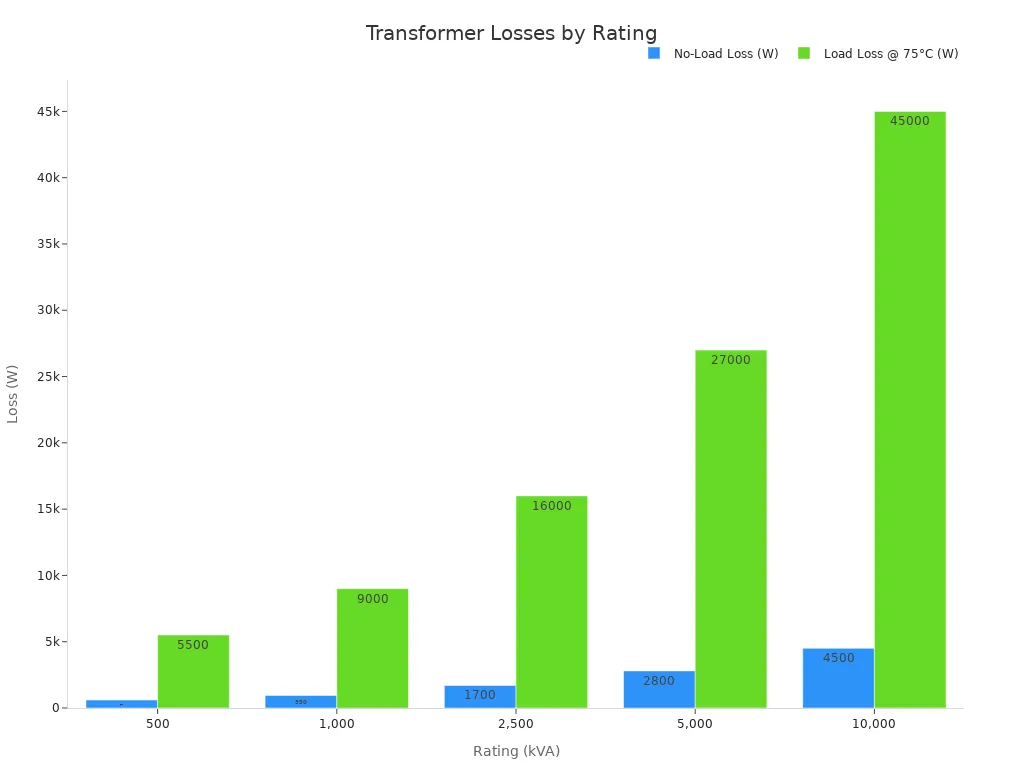
Loss figures show the same pattern. A 1,000 kVA unit carries roughly 950 W of no-load loss and 9,000 W of load loss at 75°C. A 10,000 kVA unit reaches 4,500 W and 45,000 W respectively. Minimum efficiency climbs with size, from 98.10% at 15 kVA to 99.31% at 833 kVA.
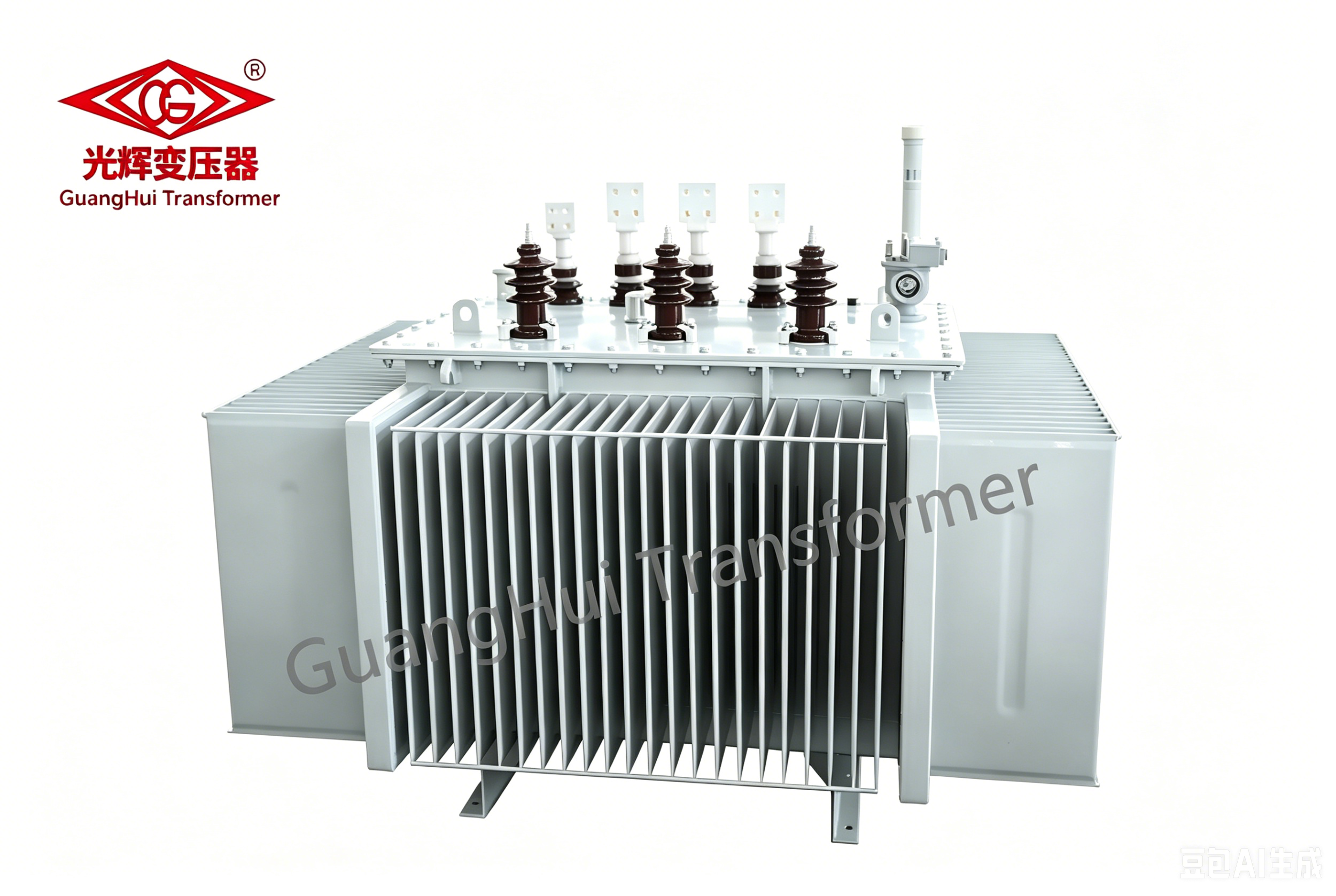
Guanghui's S20/S22 high-efficiency series targets these losses directly. The line uses hermetically sealed, maintenance-free designs with corrugated tanks for heat dissipation. It meets IEC and ANSI standards and complies with GB 20052-2024 Tier 1 and Tier 2 efficiency grades. Against legacy S11 designs, S20 cuts no-load losses by about 31% and load losses by 14–15%.
Overload Behavior and Losses
Thermal mass drives overload behavior. Oil absorbs heat during short peaks, so liquid-filled units tolerate 150%–200% short-term overload. Dry-type units typically allow about 120% for two hours. This reserve matters for utilities facing seasonal peaks or motor starting surges.
Oil-immersed transformers offer good overload capability owing to the thermal mass of the oil, while dry-type units are limited above their nameplate rating.
Loss economics favor high-efficiency tiers over time. On a 1,000 kVA unit at 50% load for 8,760 hours a year at $0.12/kWh, moving from the DOE minimum to a high-efficiency design saves roughly $9,000–$12,000 over ten years. That saving recovers a modest price premium.
Installation and Space
Indoor Versus Outdoor
Site type drives the installation plan more than any other factor. Dry-type units dominate indoor rooms because they carry no liquid to contain. Oil-filled units usually sit outdoors in substations or fenced yards, where open air handles heat rejection and spill risk. NEC Article 450 Part III still permits oil-filled units indoors below 35 kV, but the code demands a vault with 3-hour fire resistance, oil containment sized to 100% of oil volume plus 30 minutes of sprinkler flow, and ventilation that limits gas accumulation. That vault requirement adds civil work and cost, so most indoor projects choose dry-type instead.
Outdoor placement brings its own rules. IEEE 979-2012 sets separation distances between an oil-filled unit and a building. Units rated 75 kVA or less need 10 ft (3.0 m) of clearance. Ratings from 76 to 333 kVA need 20 ft (6.1 m), and units above 333 kVA need 30 ft (9.1 m). A unit holding 7,571 L (2000 gal) of oil or more needs 20 ft, or a 2-hour fire-rated wall when it sits 20–50 ft from the building. Outdoor dry-type units follow manufacturer spacing, generally 10 ft minimum.
Clearances and Ventilation
Working space and airflow clearance are separate requirements, and installers must satisfy both. NEC 110.26 governs electrical working space: roughly 1 m (3.3 ft) clear in front, a width equal to the equipment or at least 750 mm, and 2 m (78 in.) of headroom. NEC Article 450 then sets fire clearance for dry-type units. Units up to 112.5 kVA need 6 in (152 mm) from combustibles and 36 in (914 mm) from other transformers. The 113–1000 kVA band needs 12 in (305 mm) and 48 in (1219 mm). The 1001–2000 kVA band needs 18 in (457 mm) from combustibles.
Condition | Clearance | Standard |
|---|---|---|
Oil-filled, outdoor, ≤75 kVA | 10 ft (3.0 m) | IEEE 979-2012 |
Oil-filled, outdoor, 76–333 kVA | 20 ft (6.1 m) | IEEE 979-2012 |
Oil-filled, outdoor, >333 kVA | 30 ft (9.1 m) | IEEE 979-2012 |
Dry-type, indoor, ≤112.5 kVA | 6 in (152 mm) from combustibles | NEC Article 450 |
Dry-type, indoor, 113–1000 kVA | 12 in (305 mm) from combustibles | NEC Article 450 |
Ventilation deserves equal attention. Manufacturers typically recommend 150–300 mm (6–12 inches) of clearance around ventilated surfaces, with more space at larger ratings or in enclosures. Airflow paths must stay open at the top and bottom openings. Room design should add intake and exhaust openings, mechanical ventilation where needed, and no dead-air pockets or recirculation zones. Outdoor enclosures rated NEMA 3R, 4, or 4X still need spacing from walls, fences, vegetation, and snow accumulation zones.
Cost Comparison
Initial and Installation Cost
Purchase price and installation expense both shape the first cost of a project. Oil-filled units often provide better value at higher power capacities. The liquid cooling lets one tank serve a large load, so the cost per kVA falls as ratings climb. Dry-type units avoid liquid-related costs entirely. Buyers skip containment berms, spill trays, oil filtration gear, and vault construction. That saving matters most at small and medium ratings, where the unit price stays modest.
Installation labor follows the same split. A dry-type unit moves into a room and connects to the buswork. An oil-filled unit may need civil work, fire-rated walls, and oil handling equipment on site. Guanghui oil-immersed transformers range from 10kVA to 20,000kVA at up to 35kV. The line carries a 3- to 5-year warranty and passes CNAS lab testing. Those terms lower the risk premium a buyer might otherwise attach to a large liquid-filled purchase.
Lifecycle Cost
Operating losses dominate the long-term cost picture. A high-efficiency oil immersed transformer cuts no-load and load losses, and those savings compound across years of continuous duty. The efficiency advantage grows with rating, so large projects recover a price premium faster. Maintenance adds another line to the ledger. Dry-type units need cleaning and periodic electrical tests. Liquid-filled units need oil sampling, dissolved gas analysis, and annual service work.
Site conditions shift the balance. A coastal plant pays more for corrosion control on either design. A dense urban building pays a steep premium for vault construction, which favors dry-type. Project teams should model energy cost, service cost, and installation cost together. A simple comparison of sticker prices hides the real difference. Buyers who run the full lifecycle math usually find a clear winner for their own load profile.
Codes and Compliance
Fire Codes and Indoor Limits
Local fire codes decide where each design may sit. The NEC permits oil-filled units indoors below 35 kV under Article 450 Part III. That permission comes with conditions. The installation needs a vault with three-hour fire-rated construction. Containment must hold 100% of the oil volume plus 30 minutes of sprinkler flow. Ventilation must limit gas accumulation. These requirements add civil work and cost, so most indoor projects specify dry-type units instead.
Dry-type units face lighter indoor rules. Units rated 112.5 kVA or less need only 300 mm (12 in.) clearance from combustible material. Larger units need a one-hour fire-resistant room rather than a full vault. IEEE 979-2012 governs outdoor oil-filled placement. Units rated 75 kVA or less need 10 ft (3.0 m) of clearance from a building. Ratings from 76 to 333 kVA need 20 ft (6.1 m), and units above 333 kVA need 30 ft (9.1 m).
Oil Handling Rules
Oil handling rules cover containment, spills, and disposal. Operators must size containment to 110% of oil volume. Standards such as IEC 61936 and US EPA SPCC rules set the details. A spill triggers immediate reporting to authorities, containment and cleanup, soil and water testing, and possible fines. Unreported spills can bring mandatory audits or suspension of operating permits. PCB-contaminated oil carries stricter cleanup rules and higher disposal fees. Ester-based oils ease part of this burden. Natural and synthetic esters carry flash points above 300°C and earn a K-class fire hazard rating under IS:13503-2013.
Project teams should confirm local fire codes and oil handling rules before they specify either design.
Dry-type units avoid these obligations entirely. They carry no liquid to contain, report, or dispose of. That difference simplifies environmental compliance at indoor sites and removes a recurring source of regulatory risk.
Quick Comparison
Key Differences at a Glance
A side-by-side view helps project teams see where each design pulls ahead. The table below gathers the main decision points from the sections above. Each row reflects conditions covered earlier in this article, so readers can trace any entry back to its full explanation.
Factor | Oil Immersed Transformer | Dry-Type Transformer |
|---|---|---|
Cooling medium | Insulating oil in a sealed tank | Air or solid resin insulation |
Typical efficiency | 97%–99% | 95%–98% |
Short-term overload | 150%–200% | About 120% for two hours |
Fire behavior | Mineral oil can sustain a pool fire under severe faults | Self-extinguishing, no flammable liquid |
Indoor placement | Vault with three-hour fire rating required below 35 kV | One-hour fire-resistant room for larger units |
Outdoor placement | Common; IEEE 979-2012 sets building separation | Possible with manufacturer spacing |
Routine service | Oil sampling, dissolved gas analysis, annual service | Visual checks and periodic electrical tests |
Best fit | High capacity, outdoor, efficiency-driven sites | Indoor, fire-sensitive, low-maintenance sites |
The table shows a clear pattern. Liquid cooling wins on capacity, efficiency, and overload reserve. Solid insulation wins on fire safety, indoor simplicity, and spill-free operation. Neither column dominates every row.
Readers should treat the table as a starting filter, not a final answer. Site conditions, load profile, budget, and local codes still decide the outcome. A project that needs 20,000 kVA at 35 kV points toward an oil-filled unit. A hospital room with strict fire limits points toward dry-type. Teams that weigh all four factors together will specify the design that fits their own conditions.
Choosing by Application
Best Fits for Dry-Type
Indoor sites with dense occupancy form the strongest case for dry-type units. Offices, high-rises, retail spaces, schools, hospitals, and data centers all carry strict fire limits on occupied floors. A dry-type unit contains no flammable liquid, so a fault cannot feed a pool fire inside the building. That single trait often settles the specification before any other factor enters the discussion.
Rating ranges confirm the pattern. Commercial buildings typically run units from 50 kVA to 500 kVA. Hospital systems reach 225 kVA to 1500 kVA. Data centers push from 500 kVA to 3000 kVA. Medium-voltage dry-type designs operate between 1 kV and 36 kV, with common ratings at 10 kV, 11 kV, 13.8 kV, 20 kV, and 33–36 kV. These units rarely exceed 36 kV because of insulation limits and economics.
Low-maintenance environments also favor this design. A facility without oil testing equipment, spill trays, or filtration gear avoids a whole category of service work. Monthly visual checks and annual electrical tests cover most needs. Sites that value simple upkeep and spill-free operation should shortlist dry-type first.
Best Fits for Oil-Immersed
Outdoor projects that demand high capacity and steady efficiency point toward liquid cooling. Utilities and industrial plants rely on these units for substations, transmission lines, and large loads. Distribution-class models span 10 kVA to 2,500 kVA at 2,400–34,500 V primary. Power-class models reach 2,500 kVA to 100,000+ kVA at 34,500–345,000 V primary. Rural grid upgrades, industrial parks, and renewable energy integration all use this design.
Efficiency and overload reserve strengthen the case. Typical efficiency runs 97% to 99%, and short-term overload reaches 150%–200%. Seasonal peaks and motor starting surges fit within that margin. An oil immersed transformer also handles high-voltage duty above 35 kV, where dry-type designs become impractical.
Guanghui's S20/S22 series serves these roles well. The line spans 10kVA to 20,000kVA at up to 35kV. Hermetically sealed, maintenance-free construction pairs with corrugated tanks for heat dissipation. The series meets IEC and ANSI standards and complies with GB 20052-2024 Tier 1 and Tier 2 efficiency grades. A 3- to 5-year warranty and CNAS lab testing back each unit.
Project teams should match the design to site conditions, load profile, budget, and local codes. A hospital room and a rural substation rarely share the same answer.
Neither design wins everywhere. The better transformer matches the application. Dry-type units suit indoor, fire-sensitive, low-maintenance sites. An oil immersed transformer fits high-capacity, outdoor, efficiency-driven projects. Readers should weigh site conditions, load profile, budget, and local codes before they specify a unit. A hospital room and a rural substation rarely share the same answer. Fire limits, spill rules, and clearance requirements vary by jurisdiction. Project teams can consult an engineer or supplier with their load data, voltage rating, and site constraints. That conversation turns a general comparison into a specific recommendation. A short review of the project brief often settles the choice quickly.
FAQ
Which type suits an indoor substation?
Dry-type units fit most indoor rooms. They carry no flammable liquid, so fire codes treat them more lightly. NEC Article 450 permits oil-filled units indoors below 35 kV, but that path requires a vault with three-hour fire-rated construction and full oil containment. Most indoor projects therefore specify dry-type.
How much more efficient is an oil-filled unit?
Typical oil-immersed efficiency runs 97% to 99%. Dry-type units land at 95% to 98%. The gap is often only 1–2%, yet it compounds across years of continuous duty. The advantage grows with rating, so large projects recover a price premium faster.
Can a dry-type transformer handle overload?
Dry-type units typically allow about 120% for two hours. Oil-filled units tolerate 150%–200% short-term overload because the oil absorbs heat during peaks. That reserve matters for seasonal utility peaks and motor starting surges. Project teams should match the overload margin to the load profile.
What voltage and capacity ranges does each design cover?
Dry-type designs operate between 1 kV and 36 kV, and they rarely exceed 36 kV. Oil-immersed units handle high-voltage duty above 35 kV. Guanghui oil-immersed transformers span 10kVA to 20,000kVA at up to 35kV, backed by a 3- to 5-year warranty and CNAS lab testing.
Which type costs less to own over time?
Operating losses dominate the long-term ledger. A high-efficiency oil-immersed unit cuts no-load and load losses, and those savings compound over years. Dry-type units avoid containment, spill trays, and oil service work. Site conditions shift the balance, so teams should model energy, service, and installation cost together.