


How to tell if a transformer is dry type
identifying a dry type transformer involves observing several key features, including the absence of oil reservoirs or radiators, the use of solid insulation materials, a compact and lightweight design, suitability for indoor installation, and a low noise level during operation.
In the realm of electrical engineering, transformers play a pivotal role in ensuring the reliable and efficient delivery of electrical power. They come in diverse forms, each tailored to specific operational requirements and environmental conditions. Among these, dry type transformers stand out for their distinctive features, which make them suitable for a wide range of applications, especially where safety, environmental friendliness, and ease of maintenance are paramount. Understanding how to distinguish a dry type transformer from its liquid-cooled counterparts is crucial for engineers, technicians, and facility managers involved in the design, installation, and maintenance of electrical systems.
What Is a Dry Type Transformer?
A dry type transformer, as the name suggests, is a type of transformer that does not utilize any liquid, such as oil, for insulation or cooling purposes. Instead, it relies on air or gas as the insulating medium, with solid insulation materials like epoxy resin or polyester resin encapsulating the windings and core. This design eliminates the risk of oil leaks, which can pose environmental hazards and fire risks, making dry type transformers particularly suitable for indoor installations and areas with high human occupancy.
Working Principle
The working principle of a dry type transformer is fundamentally based on electromagnetic induction, the same principle that governs all transformers. When an alternating current (AC) voltage is applied to the primary winding, it generates a changing magnetic field within the core. This magnetic field, in turn, induces a corresponding voltage in the secondary winding, with the magnitude of the induced voltage determined by the turns ratio between the primary and secondary windings. The key difference in a dry type transformer lies in its insulation and cooling mechanisms, which rely on air circulation and solid insulation materials rather than liquid coolants.
Types of Dry Type Transformers
Dry type transformers can be broadly classified into two main types based on their manufacturing processes: Cast Resin Dry Type Transformers (CRT) and Vacuum Pressure Impregnated Transformers (VPI).
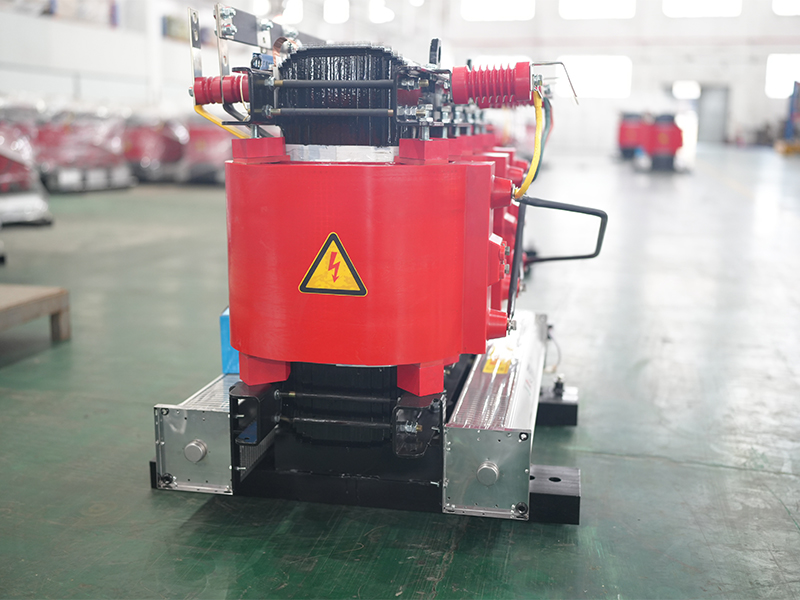
Cast Resin Dry Type Transformers (CRT): In CRTs, the windings are encapsulated in a thick layer of epoxy resin, which provides excellent insulation properties and mechanical strength. This encapsulation process involves placing the windings in a mold and pouring the resin, which then cures to form a solid, moisture-resistant barrier around the windings. CRTs are known for their high reliability, resistance to moisture and chemicals, and suitability for harsh environments.
Vacuum Pressure Impregnated Transformers (VPI): VPI transformers, on the other hand, undergo a process where the windings are impregnated with a special insulating varnish under vacuum conditions. This ensures that the varnish penetrates deeply into the winding structure, providing thorough insulation and protection against moisture and contaminants. VPI transformers offer good thermal performance and are often preferred in applications where high efficiency and compact design are critical.
Identifying Features of Dry Type Transformers
To determine if a transformer is of the dry type, several identifying features can be observed:
1.Absence of Oil Reservoirs or Radiators: Unlike liquid-cooled transformers, which typically have visible oil reservoirs or radiators for heat dissipation, dry type transformers lack these components. Instead, they rely on natural or forced air circulation for cooling, often featuring fans or ventilation openings on their enclosures.
2.Solid Insulation Materials: Dry type transformers are characterized by the use of solid insulation materials, such as epoxy resin or polyester resin, which encapsulate the windings and core. These materials are visible upon inspection and provide a clear indication of the transformer's type.
3.Compact and Lightweight Design: Due to the absence of liquid coolant, dry type transformers tend to be more compact and lightweight compared to their liquid-cooled counterparts of the same power rating. This makes them easier to install and handle, especially in space-constrained environments.
4.Indoor Installation Suitability: Dry type transformers are specifically designed for indoor use, where their low fire risk and environmental friendliness are highly valued. They are commonly found in commercial buildings, hospitals, schools, data centers, and industrial plants.
5.Low Noise Level: Compared to liquid-cooled transformers, dry type transformers generally produce lower noise levels during operation. This is due to the absence of oil circulation pumps and the use of sound-dampening materials in their construction.
Applications of Dry Type Transformers
Dry type transformers find widespread applications across various industries and settings, thanks to their unique advantages. Some notable applications include:
Data Centers: Ensuring a continuous and reliable power supply is critical in data centers. Dry type transformers, particularly CRTs, are used to step down high-voltage electricity from the grid to usable levels for servers and other equipment, while their non-flammable nature enhances safety.
Hospitals and Healthcare Facilities: In healthcare settings, where patient safety is paramount, dry type transformers provide a reliable and fire-resistant power distribution solution, minimizing the risk of electrical accidents and ensuring uninterrupted operation of life-saving equipment.
Commercial Buildings: Dry type transformers are commonly installed in commercial buildings, such as offices, malls, and hotels, to distribute power efficiently and safely to various floors and departments.
Industrial Plants: In industrial environments, where harsh conditions and the presence of flammable materials are common, dry type transformers offer a robust and safe power distribution solution, resistant to moisture, chemicals, and mechanical stress.
Renewable Energy Systems: Dry type transformers are increasingly used in renewable energy systems, such as solar farms and wind power sites, where their environmental friendliness and reliability are highly valued.
Conclusion
In conclusion, identifying a dry type transformer involves observing several key features, including the absence of oil reservoirs or radiators, the use of solid insulation materials, a compact and lightweight design, suitability for indoor installation, and a low noise level during operation. Dry type transformers offer numerous advantages over their liquid-cooled counterparts, particularly in terms of safety, environmental friendliness, and ease of maintenance. Their widespread applications across various industries and settings underscore their importance in modern electrical power systems. As technology continues to advance, dry type transformers are expected to play an even more significant role in meeting the growing demand for efficient, reliable, and sustainable power distribution solutions. Whether you are an engineer, technician, or facility manager, understanding how to identify and utilize dry type transformers is essential for ensuring the optimal performance and longevity of your electrical systems.
FAQ
Question: What are the advantages of dry type transformers over oil-immersed ones?
Answer: Dry type transformers are fire-safe, require less maintenance, and have no oil leakage risks, making them ideal for indoor use.
Question: How to determine the appropriate capacity of a dry type transformer for my project?
Answer: Consider the load demand, future expansion, and power factor. Consult our experts with your specific data for accurate capacity selection.
Question: Can dry type transformers operate in high-temperature environments?
Answer: Our dry type transformers are designed to withstand moderate high temps. But extreme heat may affect performance; proper cooling is vital.
Question: What maintenance tasks are needed for dry type transformers regularly?
Answer: Regularly check for dust accumulation, loose connections, and abnormal noises. Also, monitor temperature and insulation resistance periodically.
Question: Are dry type transformers environmentally friendly?
Answer: Yes, they are. They don't use oil, eliminating the risk of oil pollution. And they have high energy efficiency, reducing power waste.


