


What is an oil filled power transformer
An oil filled power transformer is an electrical device that steps voltage up or down while using insulating oil to cool and protect its windings. Think of it like a car radiator for electricity—it manages heat so power flows safely and efficiently across long distances.
You encounter these transformers in substations, industrial parks, and renewable energy projects. Manufacturers like Changzhou Guanghui Transformer Manufacturing Co., Ltd. build them in capacities from 10kVA to 20,000kVA. The global market for these devices is expanding at a CAGR of 12.3% from 2026 to 2033, reflecting their vital role in modern grids.
In the sections ahead, you'll discover the key components, how the oil works, and where you'll find these transformers in action.
Key Takeaways
Oil filled power transformers change voltage and manage heat for safe, efficient power transmission.
The insulating oil cools, insulates, and quenches arcs, ensuring reliable operation for decades.
These transformers last 30 to 50 years and have a very low failure rate.
Modern models meet Tier 1 efficiency standards and cut energy losses by 30 to 50 percent.
Natural ester oil offers better fire safety and moisture tolerance than mineral oil.
What Does an Oil Filled Power Transformer Do?
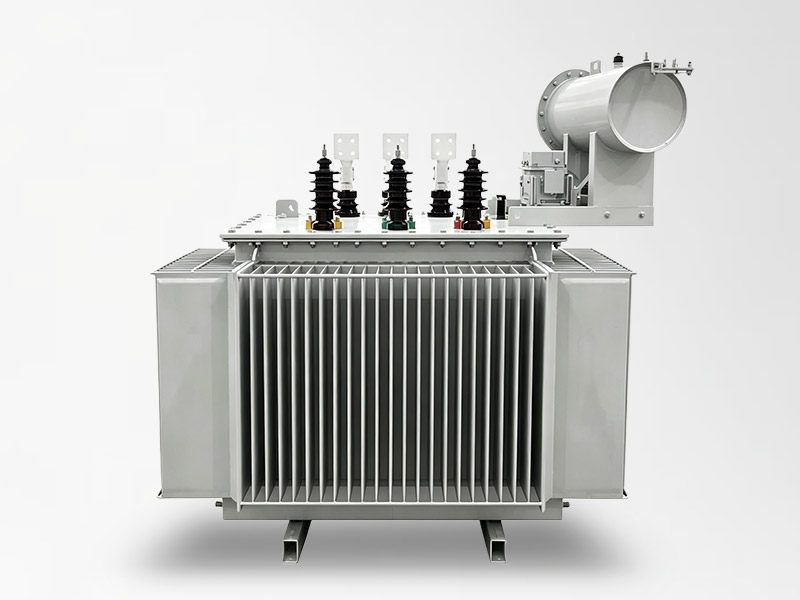
An oil filled power transformer performs two critical jobs in the electrical grid. First, it changes voltage levels to make power transmission practical. Second, it manages heat and provides insulation so the system operates reliably. Understanding these functions helps you appreciate why these devices sit at the heart of every power network.
Voltage Transformation
Voltage transformation works through electromagnetic induction. When alternating current flows through the primary winding, it creates a magnetic field. That field links with the secondary winding and induces a current there. The voltage change depends on the turns ratio between the two windings. More turns on the secondary side step voltage up; fewer turns step it down.
Step-up transformers serve power generation facilities. A typical generator produces electricity at medium voltages like 11 kV or 13.8 kV. For long-distance transmission, you need much higher voltages. Consider a real example: a transformer might raise voltage from 13.8 kV to 138 kV, a 10:1 step-up ratio. This happens because the secondary winding has ten times more turns than the primary. Higher voltage means lower current for the same power level. Lower current dramatically reduces resistive losses, which follow the I²R law. That efficiency gain lets electricity travel hundreds of miles without significant waste.
Step-down transformers work in reverse for distribution networks. A pole-mounted transformer in a residential area receives 11 kV medium-voltage electricity. Through its turn ratio, it steps this down to 400 V for household use. The process follows four steps: the primary winding energizes, a magnetic field links with the secondary, that field induces current, and fewer secondary turns produce the lower output voltage.
The table below shows typical voltage transformations across different power plant types:
Generator Voltage (kV) | Transmission Voltage (kV) | Typical Application |
|---|---|---|
6.6 | 33 | Small industrial power plants |
11 | 33 | Medium utility generation |
13.8 | 132 | Gas turbine power stations |
15.75 | 220 | Large thermal power plants |
21 | 400 | Nuclear and ultra-large power stations |
34.5 | 500 | Renewable energy transmission hubs |
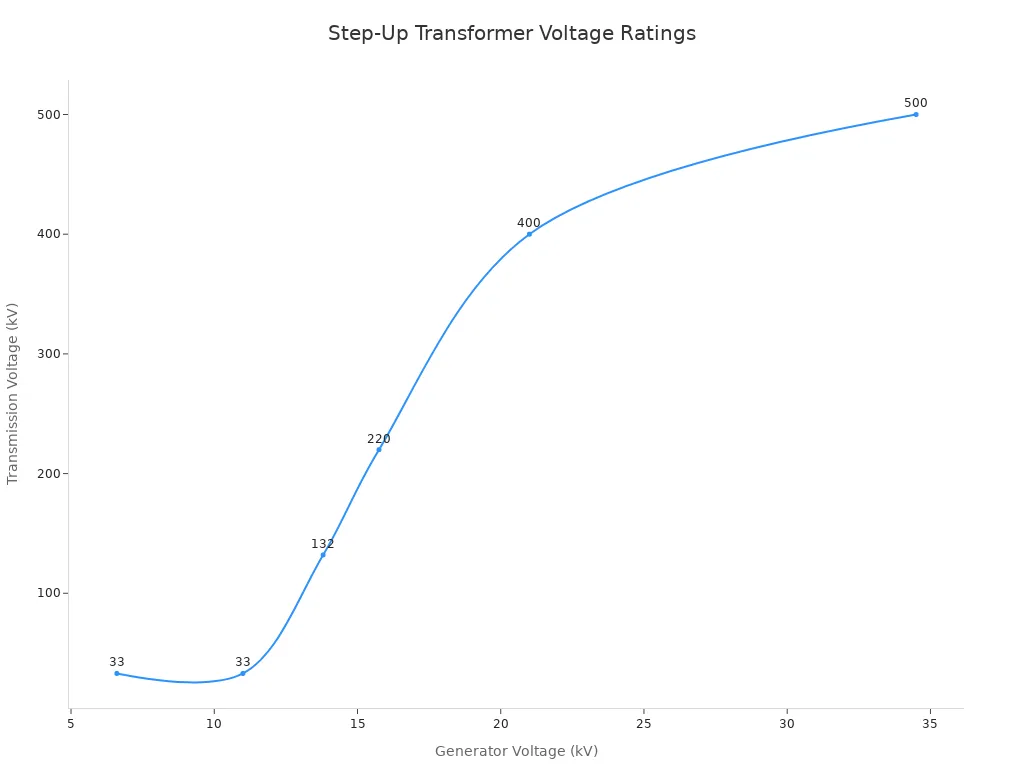
Manufacturers like Changzhou Guanghui build these units in single-phase and three-phase configurations, compliant with IEC and ANSI standards, covering capacities from 10kVA to 20,000kVA.
Cooling and Insulation
The second job involves thermal management. Windings generate heat as current flows through them. Without proper cooling, that heat degrades insulation and shortens transformer life. Oil handles this task remarkably well. It offers roughly 1,000 times better heat transfer than air. This superior thermal conductivity lets oil-filled units handle larger loads in smaller physical packages compared to dry-type alternatives.
Oil serves three distinct roles inside the tank. It provides electrical insulation that prevents arcing between live parts. It transfers heat from the core and windings to the outer tank surface, where cooling fins dissipate it. It also helps quench internal arcs during fault conditions. These combined functions explain why oil-immersed designs dominate high-capacity applications.
The cooling comparison between air and oil systems is striking. Air cooling offers moderate efficiency with limited overload capability. Oil cooling provides excellent efficiency with strong overload capacity. That difference matters during peak demand periods when transformers must handle temporary overloads without failing.
Large transmission transformers achieve remarkable efficiency, typically exceeding 99% for bigger units. The insulating oil's superior cooling directly enables this performance by keeping windings at safe operating temperatures. When you consider that a single oil filled power transformer might operate continuously for decades, that efficiency translates into substantial energy savings across its service life.
Key Parts of an Oil Filled Power Transformer
Every oil filled power transformer relies on several precisely engineered components working together. Understanding these parts helps you appreciate how these machines deliver reliable service for decades.
Tank, Core, and Windings
The steel tank forms the outer shell that protects internal components and contains the insulating oil. Small transformers use steel plates measuring 3–5 mm thick. Large high-voltage units require thicker plates, typically 8–12 mm or more, to withstand internal pressures and mechanical stresses. Many tanks feature cooling fins or radiators attached to their exterior surfaces. These fins increase the surface area available for heat dissipation, allowing the oil to transfer thermal energy to the surrounding air more effectively.
Inside the tank sits the core, constructed from thin sheets of grain-oriented silicon steel. These laminations measure only 0.23–0.35 mm thick. Why so thin? Eddy current losses increase with the square of lamination thickness. Thinner sheets interrupt the paths where these circulating currents form, dramatically reducing wasted energy as heat. A solid core would suffer continuous large eddy current loops, generating excessive heat and poor efficiency. The laminated design interrupts those loops, keeping losses low and performance high.
The windings wrap around this core and carry the electrical current. Copper stands as the standard choice for high-performance transformers. Its conductivity exceeds aluminum by roughly 60%, which means smaller conductor cross-sections for the same current. Copper also offers superior mechanical strength, helping windings withstand the enormous electromagnetic forces during short circuits. Many manufacturers use continuously transposed conductors to reduce eddy current losses further and improve heat dissipation. Aluminum appears in some designs where weight reduction and lower cost matter more than peak efficiency.
Component | Standard Material | Key Benefit |
|---|---|---|
Core | Grain-oriented silicon steel | Low hysteresis and eddy current losses |
Windings | High-purity oxygen-free copper | High conductivity and mechanical strength |
Oil, Conservator, and Bushings
The insulating oil fills the tank and surrounds the core and windings. It provides electrical insulation and transfers heat away from internal components. As the transformer operates, oil temperature rises and falls with load changes. This thermal cycling causes the oil volume to expand and contract.
A conservator tank mounted above the main tank handles this volume change. When oil expands, excess volume flows into the conservator. When it contracts, oil returns to the main tank. This system keeps the main tank completely full without creating excess pressure or a vacuum that could draw in moisture. A silica gel breather dries the air entering the conservator, and a Buchholz relay mounted in the connecting pipe detects internal faults by monitoring gas accumulation.
The conservator tank absorbs the change in oil volume with temperature: it receives the excess oil during expansion and returns it during contraction, so the main tank remains always full without excess pressure or a vacuum that would draw in moisture.
Bushings provide the critical passage for electrical current through the tank wall. Each bushing electrically isolates the high-voltage conductor from the grounded tank, preventing flashover at the penetration point. Concentric foil layers inside the bushing create uniform voltage distribution, reducing stress on the insulation. The oil-side section relies on transformer oil for insulation, while the air-side uses porcelain or composite housing. Changzhou Guanghui offers fully sealed designs that eliminate the conservator entirely for maintenance-free operation, as well as conservator-equipped models for enhanced monitoring capabilities.
Why Oil Is Essential for an Oil Filled Power Transformer
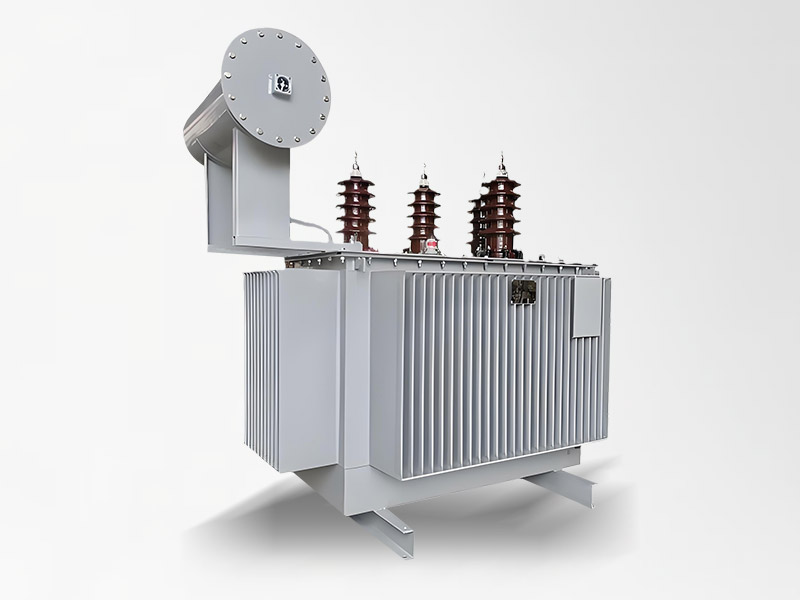
Oil does far more than fill space inside the tank. It performs three critical jobs that keep the unit safe and efficient. First, it insulates live electrical parts. Second, it carries heat away from the core and windings. Third, it extinguishes arcs that may form during faults. Each role matters for reliable long-term operation.
Insulation and Heat Dissipation
The insulating oil's dielectric strength determines how well it prevents electrical breakdown. Dry mineral oil withstands voltage gradients above 70 kV before failing. That strength drops dramatically with moisture. At just 30 parts per million (ppm) of water, the same oil breaks down below 20 kV. This explains why transformer maintenance focuses heavily on keeping oil dry.
You should understand four key dielectric properties that make oil an effective insulator:
Dielectric strength: The maximum voltage gradient oil can withstand before conducting electricity. This property prevents arcing between windings and the tank.
Moisture tolerance: Oil must stay nearly water-free. Even tiny amounts of moisture drastically reduce insulation performance.
Dissipation factor (Tan δ): This measures dielectric loss within the oil. A low value means the oil behaves like a proper insulator with minimal wasted energy.
Chemical stability: Oil must resist reactions that form acids and sludge. Those contaminants degrade insulating properties and accelerate paper insulation aging.
Heat dissipation works through natural convection. The process follows a continuous cycle:
Oil absorbs heat from the windings and becomes less dense.
The heated oil rises naturally within the tank.
Hot oil reaches external radiators or cooling fins at the tank surface.
There, it releases heat to the surrounding air and cools down.
Cooler, denser oil descends back toward the windings to absorb more heat.
This loop repeats without any mechanical pump. The design keeps your transformer cool even under heavy load.
The oil's condition directly affects the paper insulation wrapped around windings. Clean, dry oil with low acidity extends paper life by preventing moisture migration and maintaining dielectric strength. Degraded oil accelerates cellulose aging and creates hotspots that chemically break down the paper.
During switching or internal faults, small electric arcs can occur. Oil helps extinguish these arcs, preventing further damage. This increases the reliability and life of the transformer.
Types of Insulating Oil
You have two main choices for insulating fluid: mineral oil and natural ester. Each offers distinct trade-offs for your application.
Feature | Mineral Oil | Natural Ester |
|---|---|---|
Fire Point | ~150°C | >300°C (K-Class) |
Fire Classification | Flammable | Less Flammable |
Biodegradability | Poor | Fully Biodegradable |
Relative Cost | Baseline | 2-3x mineral |
Moisture Tolerance | Low (<30 ppm) | Excellent (~400 ppm) |
Typical Service Life | 20-40 years | 25-45 years |
Mineral oil remains the standard choice for general-purpose outdoor installations. It performs well across temperature ranges and costs less upfront. Natural ester costs more but offers meaningful safety advantages. Its fire point exceeds 300°C, classifying it as less-flammable. It also absorbs significantly more moisture without losing dielectric strength, which slows insulation aging and can extend transformer lifespan.
Energy efficiency standards also shape your selection. The GB 20052-2024 standard defines efficiency tiers for distribution transformers. Tier 1 compliance delivers substantial loss reductions compared to older designs.
Parameter | S11 (Standard) | S15 (Tier 1) | Reduction |
|---|---|---|---|
No-Load Loss | ≤810W | ≤520W | 36% lower |
Load Loss | ≤5200W | ≤4500W | 13.5% lower |
These figures apply to a 500kVA/10kV example transformer. Choosing a Tier 1 unit cuts your energy losses noticeably over decades of service.
Changzhou Guanghui's S13-M.RL series takes efficiency further with 3D triangular wound cores. This design reduces no-load losses and operating noise simultaneously. When you select an oil filled power transformer, consider both the insulating fluid type and the efficiency tier. Together, they determine your operating costs, safety profile, and environmental impact for the next 20 to 40 years.
Applications and Advantages of Oil Filled Power Transformers
You will find these transformers at the heart of nearly every electrical network. Power generation utilities hold the largest share of the market at 46.1%. Transmission and distribution companies represent the fastest-growing segment. Industrial manufacturing facilities rely on them heavily. Renewable energy projects, including wind and solar substations, drive increasing demand. EV charging infrastructure and commercial complexes also depend on these units.
Consider a typical urban grid. Substations receive high-voltage power from transmission lines. An oil filled power transformer steps that voltage down for safe distribution. Industrial parks use them to power heavy machinery. Solar farms collect DC power from panels, convert it to AC, then step it up for grid connection. Each location demands reliable, continuous operation.
Where You'll Find Them
Your local utility depends on these transformers for daily operations. Substations house large units that manage voltage across the network. Commercial complexes use pad-mounted transformers for underground distribution. Hospitals and data centers install them for backup power systems. Manufacturing plants run production lines through these devices.
The table below shows how different industries rely on these transformers:
Industry | Market Share / Role |
|---|---|
Power Generation Utilities | 46.1% (dominant share) |
Transmission & Distribution | Fastest-growing segment |
Industrial Manufacturing | Significant user |
Renewable Energy | Growing demand |
Key Benefits and Reliability
These transformers deliver exceptional longevity. Under normal industrial service, you can expect 30–40 years of operation. Utility transmission service extends that range to 40–50 years. With excellent maintenance and favorable loading conditions, some units exceed 50 years of service. That long lifespan makes them a sound investment.
Reliability statistics reinforce this picture. A well-maintained modern medium-voltage unit experiences an annual failure rate of about 0.15%. That figure translates to a mean time between failures of roughly 667 years. You rarely need to worry about unexpected downtime.
Fire safety adds another layer of protection. Mineral oil has a fire point in the 160–180°C range. Natural ester fluids exceed 300°C. The National Electrical Code (NEC 450.23) permits liquids with a fire point of 300°C or above for indoor installation without fire-resistant vaults. You only need spill containment. This flexibility allows safer placement closer to structures.
Changzhou Guanghui produces over 5,000 units annually. Their transformers operate reliably from -30°C to 45°C. High-altitude installations work up to 4,500 meters. They export to more than 50 countries and back their products with 3–5 year warranties. These factors combine to deliver dependable power for decades.
You now understand why these devices form the backbone of modern power delivery. They step voltage up for transmission and down for safe distribution. The oil inside handles cooling and insulation simultaneously, allowing compact designs that handle heavy loads reliably.
Advanced models from manufacturers like Changzhou Guanghui meet Tier 1 efficiency standards. These units cut energy losses by 30-50% compared to traditional designs. You gain long-term reliability backed by 3-5 year warranties and decades of service life.
As renewable energy and EV charging networks expand, these transformers keep evolving. Proven technology now combines with cutting-edge efficiency. Explore specific product options to find the right fit for your power distribution needs.
FAQ
How long does an oil filled power transformer last?
You can expect 30 to 40 years of service under normal industrial conditions. Utility transmission applications extend that range to 40–50 years. With proper maintenance and favorable loading, some units exceed 50 years. This longevity makes them a solid investment for your power infrastructure.
What maintenance does the oil require?
You should test the oil periodically for moisture and dielectric strength. Dry mineral oil withstands voltage gradients above 70 kV. At just 30 ppm of water, that strength drops below 20 kV. Regular sampling and filtration keep the oil performing at its best.
Can these transformers operate in extreme environments?
Yes. Quality units from manufacturers like Changzhou Guanghui operate reliably from -30°C to 45°C. High-altitude installations work up to 4,500 meters. You can select models designed specifically for your site conditions, whether you need desert-rated cooling or cold-weather performance.
What efficiency standards should you look for?
The GB 20052-2024 standard defines efficiency tiers for distribution transformers. Tier 1 compliance reduces losses by 30–50% compared to traditional models. A 500kVA unit with Tier 1 efficiency shows 36% lower no-load losses than a standard S11 design. These savings accumulate over decades.
How does natural ester oil differ from mineral oil?
Natural ester offers a fire point above 300°C, classifying it as less flammable. It also absorbs moisture up to roughly 400 ppm without losing dielectric strength. Mineral oil costs less upfront but tolerates only about 30 ppm of moisture. Your choice depends on safety priorities and budget.


