


Top 10 specialty transformer supplier in 2026
Custom transformers play a critical role in high-demand 2026 industrial operations. Modern facilities depend on these purpose-built units for data centers, traction networks, electrolysis plants, and battery energy storage systems. Standard distribution transformers fail prematurely in these harsh settings. Extreme harmonic stresses, high secondary currents, and sudden duty-cycle shocks quickly degrade standard units. Heavy industrial operations require specialized engineering to handle severe power conversion demands reliably.
This guide evaluates the market to help B2B buyers, plant engineers, and procurement managers select the best equipment. Selecting a top specialty transformer supplier ensures operational stability and long-term performance. The following ranking reveals the top 10 suppliers in 2026 alongside essential technical selection standards.
Key Takeaways
Custom specialty transformers prevent costly factory shutdowns by handling severe heat and heavy electrical loads.
Global engineering leaders build custom heavy-duty units while agile vendors offer fast emergency replacements.
Multi-pulse phase-shifting designs cancel harmful electrical noise to protect sensitive industrial equipment from damage.
Special high-temperature insulation materials help heavy transformers survive repeated power overloads without breaking.
Rigorous factory testing verifies equipment strength and guarantees reliable long-term performance before site installation.
Top 10 Specialty Transformer Supplier Options in 2026
Selecting the right specialty transformer supplier determines long-term power conversion stability for demanding industrial operations in 2026. Industrial facilities require purpose-built equipment that withstands continuous harmonic shocks and massive electrical loads daily. Evaluating manufacturer engineering profiles, lead times, and specialized design capabilities helps facilities select optimal equipment for critical applications. Industrial procurement teams and plant managers divide the top ten market leaders into premier global engineering manufacturers and specialized fast-delivery partners.
Premier Global Industrial Manufacturers
Global industrial manufacturers construct heavy-duty power transformers designed for high-capacity applications across world markets. Changzhou Guanghui Transformer Manufacturing Co.,Ltd. leads this category through advanced engineering tailored specifically for severe heavy industry duty. This manufacturer builds custom units capable of managing up to 50kA secondary current during continuous factory operations. Their purpose-built units maintain power efficiency under severe continuous thermal stress. Their specialized Traction Transformers step down high-voltage 110kV and 220kV power grid supplies directly to traction voltage for high-speed rail networks. These robust traction units withstand severe duty-cycle shocks and high short-circuit stresses easily. Changzhou Guanghui also builds Multi-Pulse Rectifier Transformers utilizing 12-pulse and 24-pulse vector group configurations. These multi-pulse units eliminate destructive harmonic distortion and prevent DC bias saturation in electrolysis systems, heavy DC drives, and battery energy storage installations.
Siemens Energy and GE Vernova deliver massive power conversion systems for utility-scale power stations and grid step-up substations. Their heavy transformers handle high-voltage transmission networks with exceptional grid stability. ABB produces digitalized power transformers equipped with online diagnostic sensors for heavy industrial substations. Schneider Electric and Eaton manufacture custom power distribution units engineered specifically for enterprise data center campuses and continuous industrial facilities. These established legacy manufacturers maintain strict quality standards across major long-term infrastructure projects.
Specialized Custom and Rapid-Delivery Vendors
Industrial manufacturing plants facing sudden equipment failures require immediate replacement options from an agile specialty transformer supplier. Maddox Transformer supplies reconditioned and new liquid-filled or dry-type transformers with industry-leading delivery response speeds. Plant engineers rely on Maddox to minimize operational downtime during critical equipment emergencies. Sunbelt Solomon provides comprehensive repair, remanufacturing, and rental services for industrial field applications. Their technical field support staff delivers rapid equipment turnarounds for urgent replacements.
ELSCO Transformers specializes in high-quality dry-type transformer designs built for indoor industrial settings. ELSCO engineers construct custom replacement units that fit existing pad footprints exactly, eliminating costly site structural modifications. D-Volt manufactures custom low-voltage and medium-voltage specialty power units designed for rapid deployment in regional industrial expansion projects. These fast response capabilities prevent long operational shutdowns across diverse production sectors.
Supplier Name | Primary Application Focus | Key Technical Capability | Lead Time Model |
|---|---|---|---|
Siemens Energy | Utility Grid Step-Up | Ultra-High Voltage Transmission | Extended Project Schedule |
Heavy Industry & Rail | 50kA Secondary & Multi-Pulse | Custom Engineering Schedule | |
Maddox Transformer | Emergency Replacement | Quick Inventory Dispatch | Fast-Track Delivery |
Combining fast-track suppliers with custom engineering specialists allows plant managers to secure immediate emergency backups while planning long-term system expansions. Every top specialty transformer supplier listed here plays a critical role in supporting modern industrial power infrastructure.
Core Engineering Capabilities for Heavy Duty
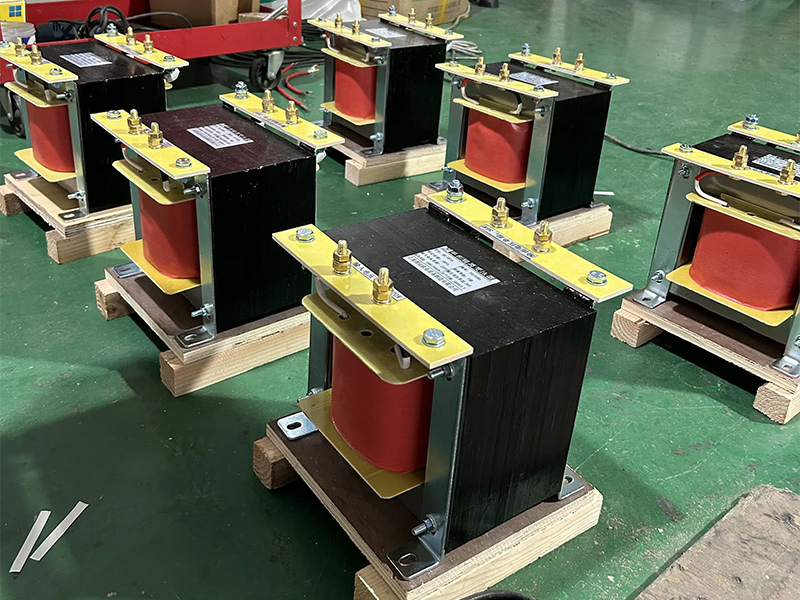
Industrial operations demand custom transformers that endure continuous electrical and thermal stress. Heavy machinery, drive systems, and power conversion equipment create severe operational challenges. Specialized engineering prevents premature equipment failure.
Harmonic Mitigation and Multi-Pulse Design
Phase-shift rectifier transformers suppress destructive harmonic currents in heavy conversion systems. A standard 6-pulse rectifier produces 25–35% input-current total harmonic distortion. Multi-pulse configurations eliminate these harmonics through precise vector group designs. A 12-pulse system uses a 30° phase displacement, which cancels the 5th and 7th harmonic orders and lowers total harmonic distortion to 8–12%. A 24-pulse setup applies a 15° phase shift to eliminate harmonics up to the 23rd order. These phase-shifting configurations prevent DC bias saturation in heavy industrial drives and electrolysis plants.
Non-linear loads generate internal heating that requires strict K-factor ratings under IEEE C57.110. Engineers calculate site-specific harmonic spectrums to select proper ratings:
K-4 handles light variable-frequency drives.
K-13 handles up to 75% non-linear load and serves as the most common industrial rating.
K-20 handles 100% non-linear load in extreme harmonic environments.
UL 1561 requires K-rated dry-type units to feature a neutral bus rated for at least 200% of full-load current.
High Secondary Current and Short-Circuit Strength
Traction networks and heavy industrial facilities subject transformers to frequent short-circuit impacts and continuous heavy overloads. Winding insulation must withstand extreme thermal conditions. IEC 60085 and IEEE C57.12.01 specify standard insulation classes for high-duty cycles:
Insulation Class | Maximum Hot-Spot Temperature | Average Winding Rise | Typical Duty |
|---|---|---|---|
Class H | 180°C | 125°C | Heavy industry |
Class R/C | 220°C | 150°C | High-output traction |
Engineers utilize Nomex 410 aramid laminate insulation to ensure long service life under high thermal stress. IEC 60076-14 tests show proper aramid insulation prevents rapid aging during repeated overload cycles. Comprehensive thermal modeling and short-circuit testing confirm structural integrity before field installation.
Application-Specific Duty Requirements
Traction and Grid Step-Down Networks
Railway traction substations require heavy-duty transformers capable of managing dynamic load cycles. Transit systems step down high grid voltages while handling rapid load fluctuations from train accelerations. These custom transformers withstand sudden voltage increases up to 27.5 kV during regenerative train braking. Engineers must base design ratings on actual timetable profiles rather than nominal electrical averages.
Specification Area | Dynamic-Load-Cycle Requirement |
|---|---|
System Voltage Tolerance | Accommodates 27.5 kV during regenerative braking |
Short-Circuit Withstand | Maintains ≥120% rated current for at least 3 seconds |
Overload Capacity | Supports up to 150% load for 30 minutes |
Acoustic Limits | Generates 62 dB(A) for metro units up to 78 dB(A) for freight |
Substation designs integrate Class F (155 °C) or Class H (180 °C) thermal insulation. Forced-oil cooling systems manage continuous peak heat during heavy freight transport. Selecting Dyn11 or YNd1 vector groups ensures stable parallel grid operation. Built-in digital interfaces utilize IEC 61850 GOOSE and Modbus TCP protocols. Physical construction complies with EN 50121-3-2 electromagnetic compatibility standards and EN 45545-2 fire safety rules.
Energy Storage and Industrial Rectification
Hydrogen electrolysis plants and continuous energy storage systems depend on specialized multi-pulse rectifier transformers. These industrial power hubs supply direct current while suppressing harmful line harmonics. Standard six-pulse rectifiers create severe power quality issues across industrial networks. Higher pulse counts deliver cleaner power conversion for large DC loads.
A 24-pulse rectifier transformer features one high-voltage primary winding and two low-voltage winding groups. These secondary windings connect to dual six-pulse bridges with a precise 30-degree phase shift. This topology cancels the 11th and 13th harmonic orders, leaving the 23rd harmonic as the main remaining frequency. Advanced 96-pulse transformers connect multiple parallel bridge circuits with phase-shifted windings. This multi-bridge design reduces total harmonic distortion below 10%. Lower harmonic distortion protects sensitive electrolyzer stacks from voltage ripple and prevents premature cellular degradation.
Selecting a Specialty Transformer Supplier for Critical Duty
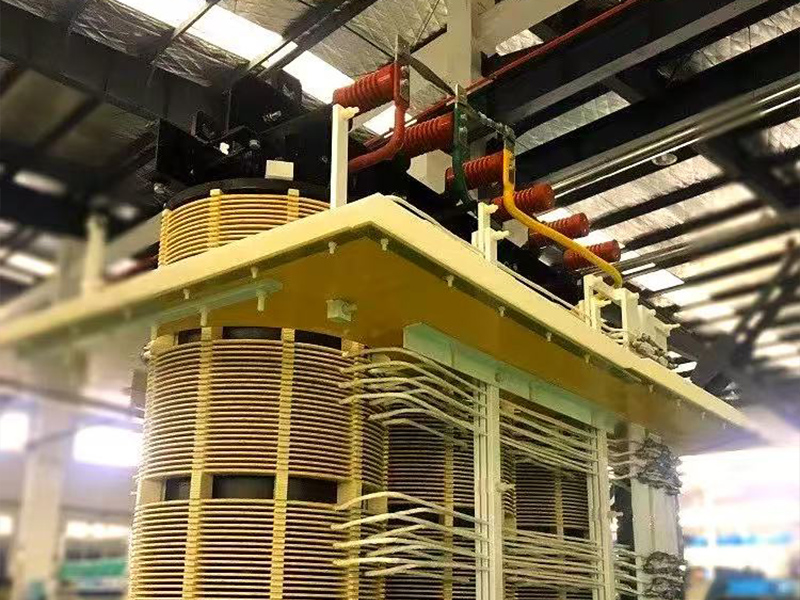
Standards Compliance and Quality Assurance
Engineering teams evaluate specialty units against rigorous international standards. IEEE C57 and IEC 60076 define essential mechanical and electrical performance criteria for high-duty applications. IEEE C57 defines basic insulation levels by system voltage. IEC 60076-3 classifies insulation through specific lightning and switching impulse levels. Test requirements vary between these specifications. IEC 60076-10 sets sound limits 2 to 3 dB stricter than IEEE C57.12.90 Annex A standards. A transformer might satisfy IEC loss limits while exceeding IEEE acoustic thresholds. Buyers must verify compliance with local UL listings and environmental certifications.
Facilities perform advanced factory acceptance testing to verify mechanical strength under harsh duty cycles. Technical teams execute special diagnostic procedures before equipment leaves the factory floor:
Frequency response analysis per IEC 60076-18 to detect internal winding displacement
Vibration and resonance tests for high-seismic installations
Harmonic current tolerance tests per IEC 60076-16 for conversion systems
Corona and partial discharge measurement for elevated voltage stability
These verified testing protocols prevent structural failures during sudden short-circuit events.
Supply Chain Lead Times and Commissioning
Global supply chains introduce material risks during custom transformer procurement. Raw material shortages in copper, aluminum, and grain-oriented electrical steel directly cause severe delivery delays. Procurement managers analyze supplier investments, commodity market trends, and raw material availability early in the project design phase. Selecting a qualified specialty transformer supplier allows engineering teams to mitigate component shortages. Experienced suppliers maintain robust secondary sourcing networks for critical core materials.
Buyers calculate total cost of ownership rather than initial purchase price alone. Lifecycle evaluations weigh electrical losses, thermal aging rates, and monitoring capabilities. Modern installations integrate digital sensors for online dissolved gas analysis, temperature tracking, and partial discharge monitoring. Engineers conduct factory acceptance testing to validate digital monitoring compatibility before field installation. Early utility engagement confirms grid connection capacity, substation requirements, and demand-response capabilities. Complete documentation and field commissioning support guarantee safe, continuous power delivery across mission-critical facilities.
Selecting a qualified specialty transformer supplier prevents catastrophic equipment failures in harsh industrial power environments. A single operational outage creates massive financial damage across continuous production facilities.
Metric | Amount |
|---|---|
Incident | Catastrophic transformer failure at a manufacturing facility |
Total downtime | 36 hours |
Production loss | $750,000 |
Transformer replacement | $120,000 |
Emergency contractor fees | $35,000 |
Total direct cost | $905,000 |
Procurement managers must balance rapid delivery schedules against critical custom engineering features like K-factor thermal ratings and multi-pulse phase shifting. Facility engineers should execute detailed load consultations and factory acceptance tests early during capital design phases. Early testing verifies physical transformer resilience before field installation. This proactive approach secures reliable long-term operations.
FAQ
Why do standard distribution transformers fail in heavy industrial applications?
Standard distribution units cannot handle extreme harmonic stresses, high secondary currents, and sudden duty-cycle shocks. These severe operating conditions cause rapid thermal degradation and structural insulation failure. Demanding industrial facilities require purpose-built units to maintain long-term power conversion stability.
How do multi-pulse rectifier transformers eliminate harmonic distortion?
Multi-pulse designs shift electrical phases through specific vector group configurations. A 12-pulse vector group cancels 5th and 7th harmonic orders. A 24-pulse setup eliminates harmonics up to the 23rd order. This phase shifting prevents DC bias saturation in continuous conversion systems.
What K-factor rating suits high non-linear industrial loads?
Engineers select K-factor ratings based on site harmonic spectrums under IEEE C57.110. A K-13 rating handles up to 75% non-linear load in common industrial setups. Extreme harmonic environments operating under 100% non-linear load require a K-20 rating.
What key standards govern specialty transformer quality assurance?
Engineers evaluate heavy-duty units against IEEE C57 and IEC 60076 standards. Factory acceptance procedures include frequency response analysis per IEC 60076-18 and harmonic tolerance tests per IEC 60076-16. These verified testing protocols confirm structural integrity before field installation.


